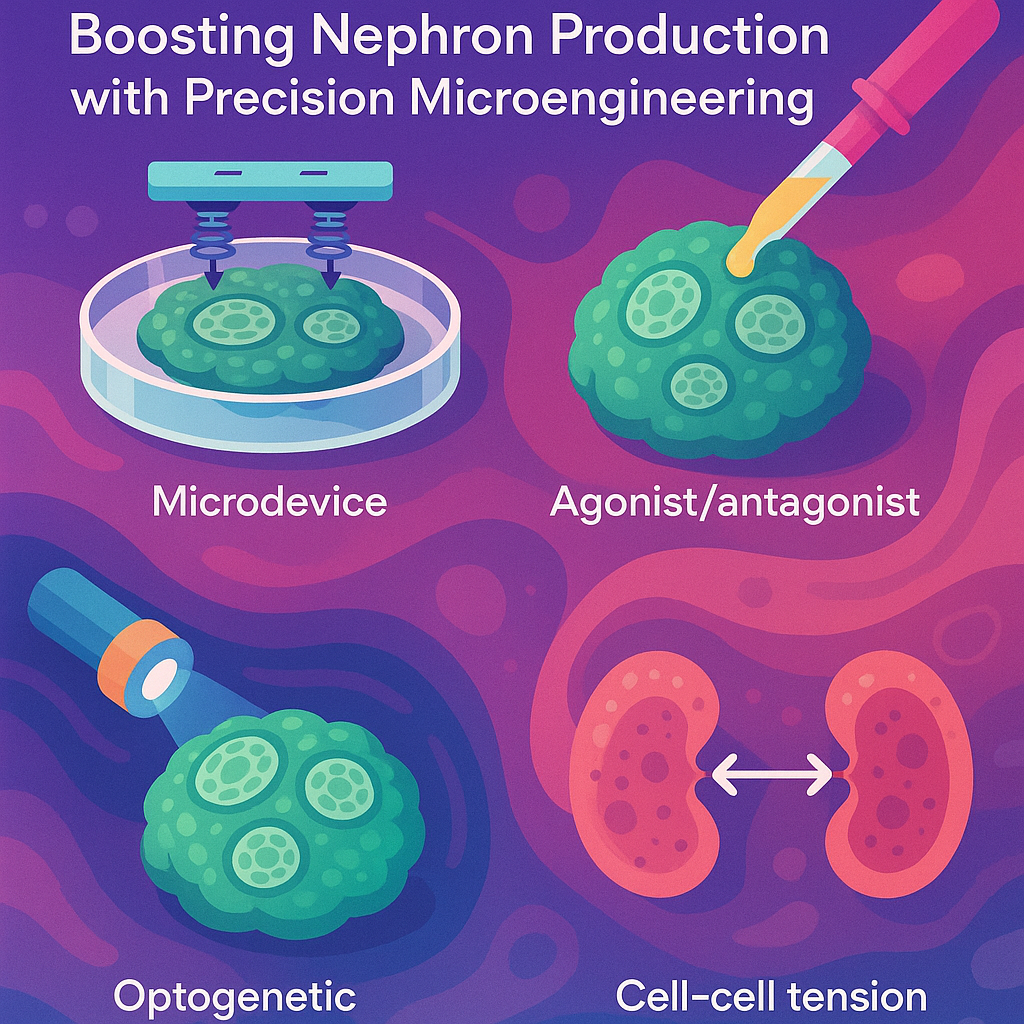
Invented by HUGHES; Alex, VIOLA; John, LIU; Jiageng, PRAHL; Louis S., HUANG; Zheyuan, PORTER; Catherine
Kidney disease is a leading cause of sickness worldwide. Scientists and doctors have been searching for ways to grow new, healthy kidney tissues in the lab. A new patent application reveals a breakthrough method that controls how kidney cells develop by using gentle pushes and pulls—called mechanical stress. This article will guide you through why this matters, the science behind it, and what makes this invention so special.
Background and Market Context
Kidneys are vital organs that filter waste from our blood. When kidneys fail, people may need dialysis or even a kidney transplant. But there are not enough donor kidneys for everyone who needs one. Scientists have been working to solve this problem by growing tiny versions of kidneys, called organoids, from stem cells in a dish. These organoids could be used for research, drug testing, or even as replacement tissue for patients.
Yet, growing kidney organoids that work like real kidneys has been very hard. The main problem is that the tiny filtering units of the kidney, called nephrons, do not always form in the right places or in big enough numbers inside the lab-grown tissues. This makes the organoids less useful for treating disease or for understanding how kidneys work.
There is a big market for better kidney organoids. They could make it possible to test new drugs safely without needing to use animals or people at first. They could help scientists study diseases that affect the kidney. Most importantly, they could one day allow doctors to make new kidney tissue from a patient’s own cells, reducing the need for organ transplants and the risk of rejection.
But to reach these goals, we need better ways to guide the growth and development of kidney organoids. The way cells are handled in the lab—how they are arranged, what they stick to, and what signals they receive—can have a big impact on how they grow. So far, most lab methods have focused on using special chemicals called growth factors to tell the cells what to do. However, this hasn’t been enough to make kidney organoids that really look and work like real kidneys.
This is where the new patent application comes in. It describes a method for using gentle mechanical forces—like pressing, stretching, or changing the stiffness of the environment—to direct kidney stem cells as they turn into nephrons. This idea is inspired by how kidneys develop naturally inside a growing embryo, where cells constantly feel and respond to physical forces around them. By copying these forces in the lab, the inventors hope to make better, more useful kidney organoids.
If this method works as well as the early results suggest, it could have a huge impact. It could lead to new kidney replacement therapies that use a person’s own cells. It could also make it easier to study kidney diseases and test new treatments safely. For companies and hospitals, this means better products and better care for patients. For researchers, it means more powerful ways to study how kidneys work and why they sometimes fail.
Scientific Rationale and Prior Art
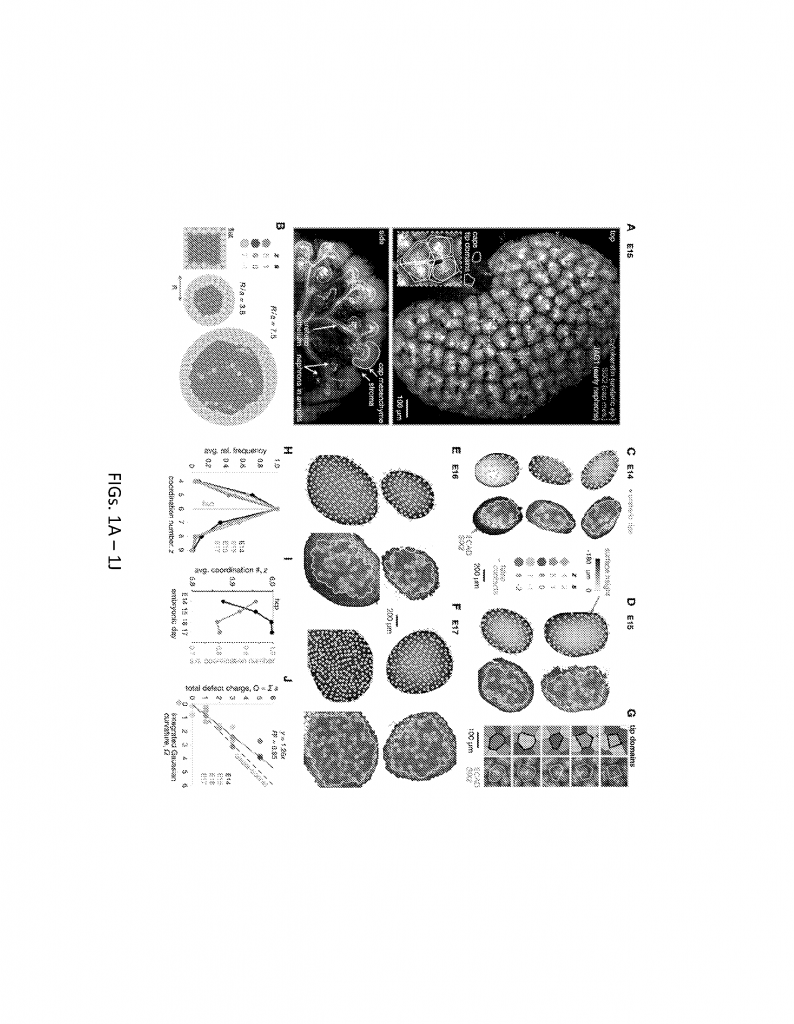
To understand the science behind this invention, let’s take a closer look at how kidneys and nephrons form. In the early stages of kidney development, special cells called nephron progenitor cells gather near the ends of tiny tubes called ureteric buds. These buds branch out and grow, and as they do, they send signals to the progenitor cells to start forming new nephrons. This process happens in waves, with new nephrons forming each time the buds split into two.
What is remarkable is that the physical environment—the shape, stiffness, and tension around these cells—changes during each wave. The cells feel when they are being pressed, stretched, or crowded by their neighbors. These mechanical signals are just as important as the chemical signals in telling the cells what to become.
Until now, most work on growing kidney tissues in the lab has focused on copying the chemical signals. Scientists add growth factors to the culture dish in a sequence, hoping to mimic what happens in the body. While this approach can make cells turn into kidney tissue, it often results in organoids with poorly formed nephrons, low nephron numbers, or random placement of nephrons. The organoids lack the complex structure of a real kidney.
Some earlier studies have looked at how the stiffness of the culture surface or the arrangement of cells can affect their development. In other fields, like heart or bone tissue engineering, it is well known that mechanical forces can guide cell fate. But in the kidney field, the role of mechanical stress has been mostly overlooked.
The prior art includes methods for using different types of scaffolds, gels, or patterned surfaces to control the shape and organization of tissue cultures. There are also patents describing ways to use microfluidic devices to create flow or shear stress. However, none of these methods specifically target the mechanical microenvironment of nephron progenitor cells in a way that mimics the cycles of stress and relaxation seen during real kidney development.
The inventors of this new method found that by gently mimicking the cycles of mechanical stress experienced by nephron progenitor cells in the embryo, they could increase the number of nephrons formed in organoids. They also discovered that controlling when and where these stresses are applied allows for better placement and organization of nephrons. This is a big leap forward, because it brings the structure of lab-grown organoids much closer to that of a natural kidney.
The scientific rationale behind this approach is strong. Cells are not just simple bags of chemicals; they constantly sense and respond to the physical forces around them. When a cell is stretched or pressed, special proteins inside the cell change shape and send signals to the cell’s nucleus. These signals can turn on or off genes that control what the cell becomes. In the case of kidney development, this means that the right kind of mechanical stress can push a progenitor cell to become part of a nephron.
The inventors have also identified specific pathways inside the cell that are sensitive to mechanical stress. For example, the Wnt/β-catenin, BMP/pSMAD, Rho/ROCK, and Yap/Taz pathways all play roles in both cell mechanics and kidney development. By tuning these pathways—either with drugs, genetic tools, or direct mechanical manipulation—the inventors can guide cell fate with great precision.
This method is not just about pushing or pulling on cells. It can also use light to control proteins inside the cell (optogenetics), or change the materials the cells are grown on to adjust how stiff or soft they feel. It can involve applying pressure, stretching, vibration, or even changing the shape of the culture dish. All of these tactics are designed to recreate the dynamic environment of the developing kidney, where cells are constantly adjusting to their surroundings.
In summary, while previous work has recognized the importance of chemical signals and cell arrangement in kidney organoid development, this new method is the first to focus on the cycles of mechanical stress that are a natural part of nephron formation in the embryo. By bringing these ideas into the lab, the inventors have opened up new possibilities for making better, more functional kidney tissues.
Invention Description and Key Innovations
At the heart of this patent application is a collection of methods and systems for controlling how nephron progenitor cells turn into nephrons by applying or adjusting mechanical stress. Let’s break down how the invention works and what makes it different.
The main idea is simple: by changing the mechanical forces experienced by nephron progenitor cells, you can make them more likely to form nephrons, and you can control where and when this happens inside a kidney organoid. This is done by either direct mechanical means (like pressing, stretching, or vibrating the cells), by changing the properties of the material the cells are grown on (making it stiffer or softer), or by using special tools to control the stress inside the cells themselves.
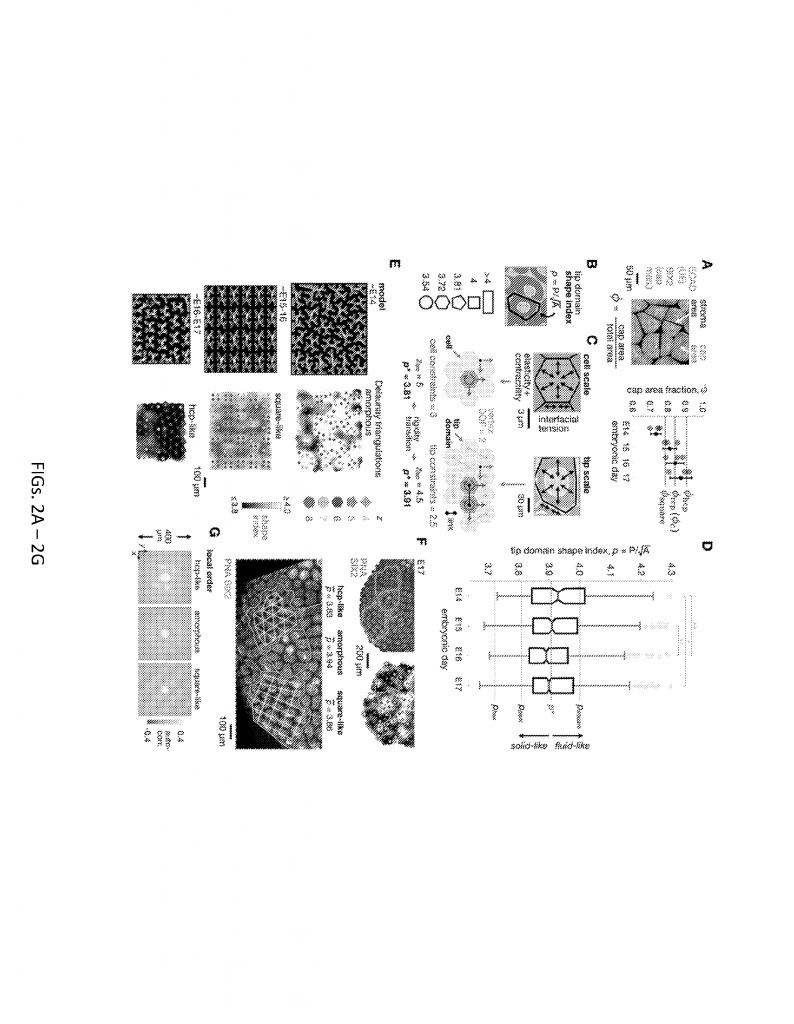
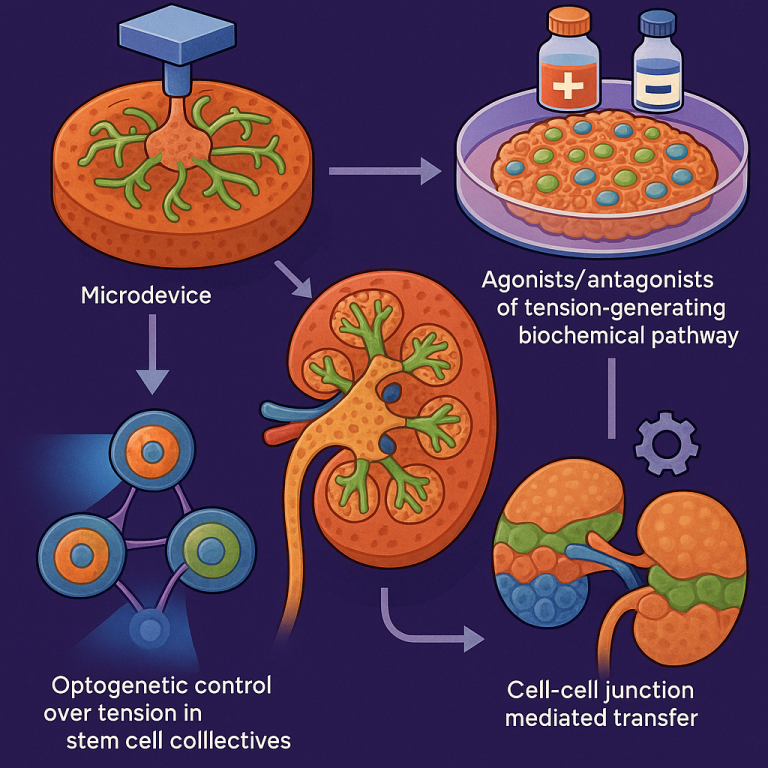
One way the method works is by applying an outside force to the cells—pushing, stretching, or vibrating them at certain times. The force can be steady or can change in cycles, mimicking how kidney development happens in waves in the embryo. This can be done using microdevices that gently poke or pull on the cells, or by shaking or vibrating the culture dish.
Another way is by changing the inside tension of the cells. This is done by adding drugs that affect the cell’s skeleton, like ROCK inhibitors or myosin blockers, or by turning on or off certain genes. The inventors also describe using optogenetics—using light to control proteins that manage tension inside the cell. This allows for very precise control, even affecting single cells or small groups of cells at a time.
The method can also control the materials that the cells touch. For example, cells can be placed on or embedded within hydrogels, extracellular matrices, or special polymers that can change their shape or stiffness. By making the environment more or less stiff, or by changing its shape, the inventors can influence how cells feel and respond.
A key feature of the invention is the ability to control stress in a patterned way. This means that not all cells get the same treatment; some areas of the organoid can be stressed more than others, leading to the formation of nephrons in specific places. This is important for making organoids that have the right structure and function.
The method is also flexible. It can be used in simple two-dimensional cultures (cells growing in a flat layer) or in three-dimensional organoids (cells growing as a mini organ). It can be used on its own or in combination with other methods, like adding growth factors or using genetic tools.
The patent also claims systems designed to apply these methods. For example, a system might include a manipulator that can press or stretch cells, a light source for optogenetics, or a supply of drugs that can be added at precise times. The system can be automated, making it possible to run many experiments at once or to grow organoids at a large scale.
One exciting application is in the creation of synthetic kidneys. The inventors describe making cartridges or modules containing nephrons made by this method, which can be installed in synthetic kidney devices. These devices could be used for dialysis, drug testing, or even as implantable organs in the future.
Another application is in disease modeling and drug testing. By making organoids with more and better-organized nephrons, researchers can study kidney diseases more accurately and see how new drugs affect kidney function in a controlled setting.
The key innovations of this invention are:
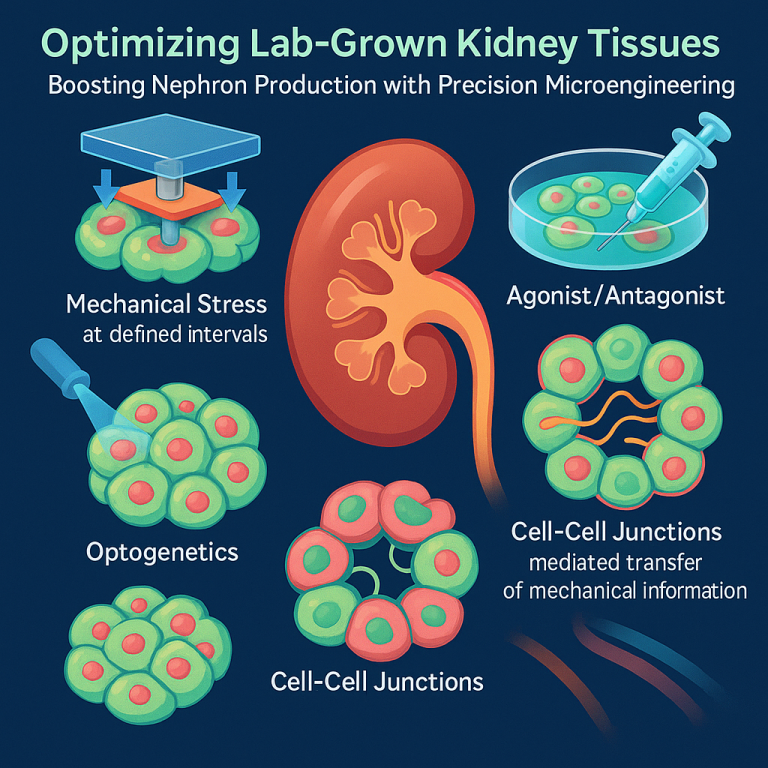
- Using cycles of mechanical stress to increase the number and control the placement of nephrons in kidney organoids, mimicking the natural development process.
- Applying both outside (extrinsic) and inside (intrinsic) mechanical cues, including the use of drugs, optogenetics, and engineered materials.
- Patterned control, allowing specific areas to receive different levels or types of stress for precise organization of nephrons.
- Systems and devices that automate and standardize the application of mechanical stress, enabling large-scale production and research.
- Applications in synthetic kidneys, disease modeling, drug testing, and personalized medicine.
This invention bridges the gap between how kidneys develop in nature and how we try to grow them in the lab. By paying attention to the physical environment and not just the chemical signals, the inventors have created a new toolbox for tissue engineering. This could make future kidney organoids more useful for patients and researchers alike.
Conclusion
The patent application discussed here introduces a bold new approach to growing kidney tissues in the lab. By copying the gentle pushes and pulls that cells feel during real kidney development, this method makes it possible to control how and where nephrons form inside organoids. This leads to more realistic and functional kidney tissues, opening the door to better disease models, safer drug testing, and perhaps even new therapies for people with kidney failure.
The science behind the method is strong, drawing on deep understanding of both cell biology and physics. The flexibility of the approach means it can be adapted for many uses, from making synthetic kidneys to studying genetic diseases or drug toxicity. For companies, hospitals, and researchers, this invention offers tactical and actionable solutions to long-standing problems in kidney tissue engineering.
As this technology moves from the lab to the clinic, we may soon see a future where kidney failure is no longer a life sentence. Instead, patients could receive new, lab-grown kidney tissue made from their own cells—engineered with the help of mechanical stress to work just like the real thing. The journey is just beginning, but the path forward has never looked clearer.
Click here https://ppubs.uspto.gov/pubwebapp/ and search 20250333708.