
Invented by Mamidwar; Rajesh Shankarrao, Hou; Victor T., Vo; Binh, Wood; Sam C., Avago Technologies International Sales Pte. Limited
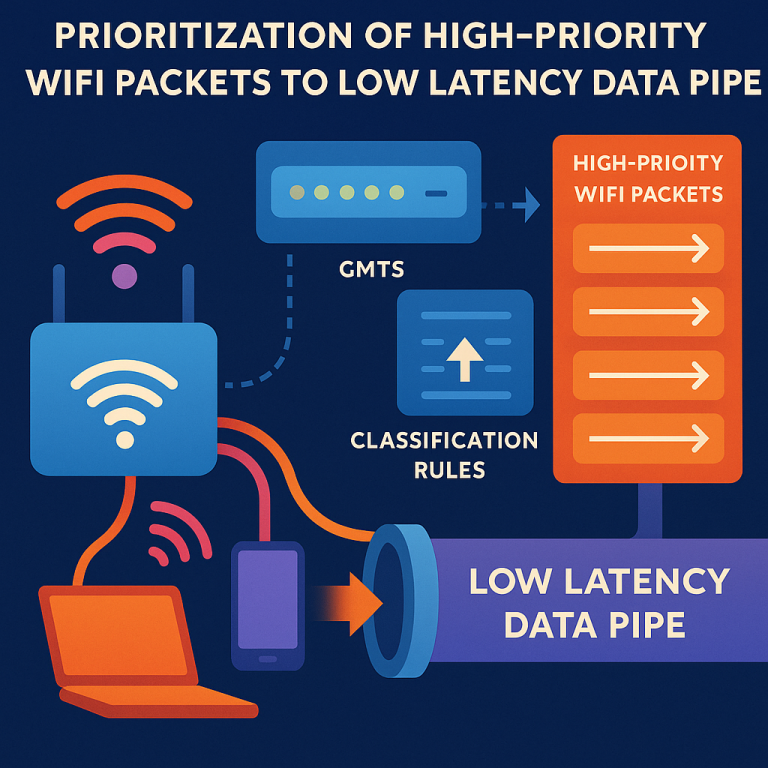
Let’s dive straight in. This patent application is all about making your WiFi faster and smoother, especially for things like games, video calls, and other apps that need quick reactions. It describes a new way for home and business networks to work with internet service providers (ISPs) to deliver low-latency (or “fast”) data to your devices, making sure the most important data gets to you first, with as little delay as possible. We’ll break down how this works, why it matters, and what makes it unique.
Background and Market Context
The internet is a busy place. Every time you watch a video, play an online game, or join a video call, your device sends and receives lots of data packets. Each packet travels through your home network, then out through your modem to your ISP, and finally across the wider internet. If any part of this journey is slow, you notice it as lag, buffering, or poor quality.
In recent years, more people are using the internet for things that need instant responses, like cloud gaming, virtual reality (VR), video calls, and even virtual classrooms. These activities are called “low latency” because they need very short delays. Traditional internet services were designed for browsing or streaming, where a little delay is okay. But with low latency apps, even small delays ruin the experience.
ISPs have started offering “low latency” plans, promising faster, more responsive connections for users who need it. Meanwhile, at home, more devices and applications compete for bandwidth—think of smart TVs, tablets, laptops, security cameras, and more. When all these devices use the network at once, data packets can get stuck in queues, waiting their turn. This is where latency creeps in.
The patent addresses a real pain point: even if your ISP provides a special “fast lane” for your data, your home network might not know which packets are urgent and which are not. So, the benefit of that fast lane can be lost if your WiFi router or access point treats all data the same way.
This is a big deal for the market. With more people working from home, attending virtual events, or gaming online, the demand for networks that can handle low latency traffic efficiently is sky-high. Companies, families, and gamers all want the best possible experience, making technology that delivers low latency a must-have, not just a nice-to-have.
But the challenge is not just about speed. It’s also about making sure the right data gets priority. If your router can’t tell if a packet is for a video call or for a background download, it can’t make smart choices. This patent introduces a smarter way to connect the ISP’s low latency services with your home WiFi, ensuring the benefits of that fast lane reach your devices.
Scientific Rationale and Prior Art
Now, let’s look at why this technology is needed and what has been done before.
Traditionally, home networks and ISPs have managed data traffic using rules called “Quality of Service” (QoS). QoS lets you set priorities, like making sure your video streaming doesn’t get interrupted. But these systems often rely on simple rules, such as recognizing certain types of data or specific devices. They don’t always know which packets are truly urgent, especially when it comes to fast-changing or new types of applications.
On the ISP side, technologies like DOCSIS (used in cable internet) have introduced “dual pipe” architectures. This means they have two separate channels: one for normal traffic and one for low latency traffic. ISPs can use these to prioritize certain types of packets—like those from online games or video calls—over others. But once packets leave the ISP’s controlled network and enter your home, this special treatment often stops.
One big reason is that the information about which packets are “low latency” is often stripped out or not passed along to your home WiFi router or access point. So, even if your ISP has carefully sent your gaming data down the fast lane, your home network might drop it into a regular queue, mixing it with everything else.
Prior solutions have tried to fix this by allowing users to manually set priorities or by using basic detection of traffic types. Some routers let you put a device in “gaming mode,” or prioritize video calls. But these are blunt tools and often require manual setup. They don’t automatically recognize traffic marked as low latency by the ISP, and they can’t easily adapt to new apps or services.
Other approaches have relied on packet inspection, looking inside each packet to guess what it’s for. This can be slow, inaccurate, and sometimes raises privacy concerns. Some have tried more complex approaches, but often these are hard to manage, expensive, or only work in specific environments.
What’s missing is a way for the home network to “see” and honor the special markings or rules the ISP uses to identify low latency traffic. If your WiFi router could recognize these markings and give those packets priority—skipping the regular queue, disabling certain features that add delay, or sending the data on the fastest possible path—then the full benefit of ISP low latency services would finally reach your devices.

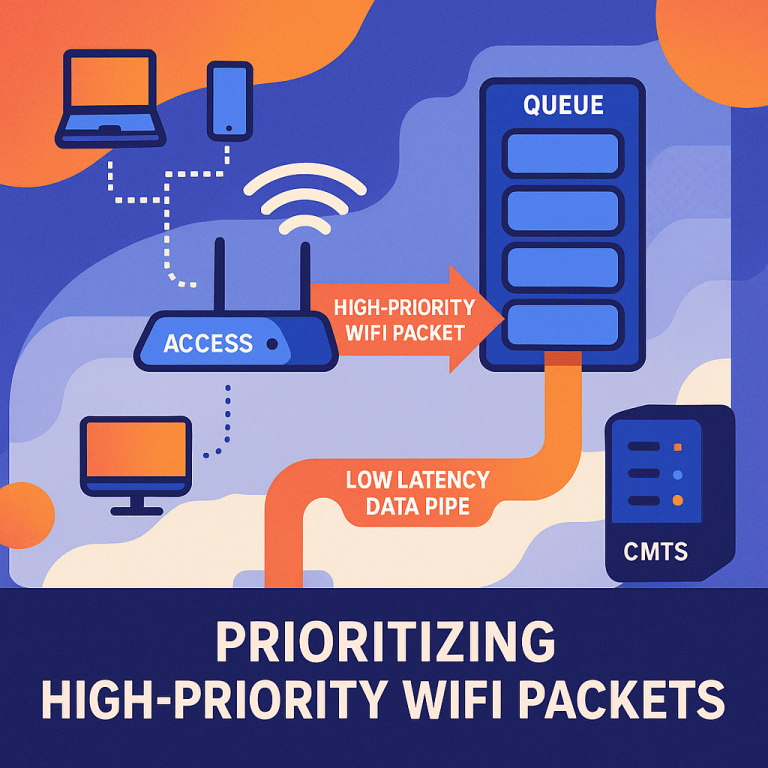
This is where the patent comes in. It proposes a system where your access point (the box that sends WiFi in your home) receives the same low latency rules or markings from the ISP or from the device monitoring the ISP’s network. This access point can then identify which packets need low latency treatment and handle them specially—placing them in a high-priority queue, disabling delays like packet aggregation, or routing them past slow mesh nodes. This connects the “fast lane” from the ISP all the way to your phone, laptop, or gaming system.
Invention Description and Key Innovations
The core idea of this patent is to create a seamless path for low latency data from the ISP, through your modem and access point, right to your devices. It does this by sharing and honoring the rules or markings that identify low latency traffic, ensuring that packets marked as urgent get special treatment at every step.
Here’s how it works in simple terms:
1. Receiving Low Latency Rules: An access point (your WiFi box) receives a set of rules or markings from a device monitoring the ISP’s cable modem termination system (CMTS). These rules indicate which packets are considered low latency—maybe by looking at special flags, packet fields, or unique identifiers (tuples).
2. Identifying Low Latency Packets: When the access point receives packets from the modem (or directly from the ISP’s CMTS), it checks them against these rules. If a packet matches, it’s identified as needing low latency handling.
3. Special Handling for Urgent Packets: The access point then sends these packets into a high-priority queue, separate from normal traffic. This queue is set to be processed first, ensuring the data gets to your device as quickly as possible.
4. Other Smart Actions: The system can also disable features that add delay, like packet aggregation (where multiple small packets are bundled together, which saves bandwidth but adds a little wait time). For mesh networks (where your WiFi signal hops through several boxes), the access point can bypass slower nodes, sending the packet straight to the intended device.
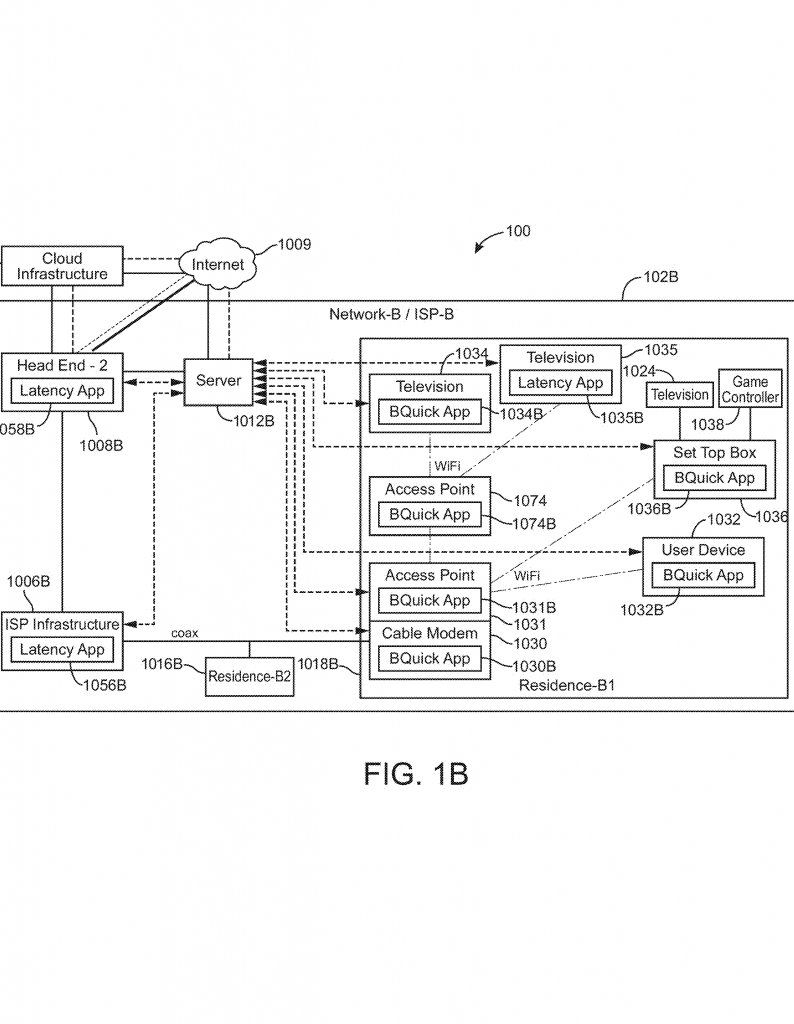
5. End-to-End Consistency: By mapping ISP low latency flows all the way to your device, the system ensures the benefits of the ISP’s “fast lane” don’t get lost once the data hits your home network.
6. Flexible Deployment: This approach can work with different kinds of home networks (including those with mesh setups), and supports updates—so new rules or types of low latency traffic can be added as needed without replacing hardware.
Key Innovations Include:
– End-to-End Low Latency Mapping: Unlike past solutions, this patent proposes a way for the access point to receive and process the same classification rules the ISP uses. This keeps the special treatment for urgent packets all the way from the internet backbone to your device.
– Dynamic Rule Sharing and Updates: The system allows for rules and packet markings to be updated in real-time. If new apps or services require low latency, the rules can be changed without touching the user’s hardware.
– Multiple Identification Methods: The access point can identify low latency packets by looking at flags, packet fields, or tuple information (unique combos of addresses and ports). This is much more flexible and accurate than guessing based on device or basic traffic type.
– Queue Management and Smart Routing: Packets identified as low latency are sent through dedicated high-priority queues. In mesh networks, the system can choose the fastest route, skipping slower nodes when needed.
– Aggregation Control: The system can turn off packet aggregation for low latency traffic, so urgent packets aren’t delayed waiting to be bundled with others.
– Bypass Capabilities: In complex home networks, the system can send packets directly to the device, skipping hops that might add delay.
– Compatibility with Existing Standards: The invention is designed to work with current ISP technologies like DOCSIS and GPON, and fits into existing home networks.
– Improved User Experience: By ensuring that low latency services (like gaming, video calls, or VR) get the fastest possible path, users enjoy smoother, more reliable connections.
– Subscription and Monetization: ISPs can offer premium low latency services, and the system can track and manage which devices or users get access—opening new business models for service providers.
This approach is both practical and forward-looking. It combines the power of ISP network management with smart, dynamic handling inside the home network. It doesn’t require users to understand or tinker with complex QoS settings, and it can adapt as new apps and devices emerge.
The technical details in the patent ensure the system can work with various network setups, can be managed remotely, and can be updated as needed. It’s a flexible, actionable framework for delivering “true” low latency to homes and businesses.
Conclusion
This patent is about making the internet better for everyone—especially those who need fast, reliable responses for games, video calls, and cutting-edge applications. By letting your home network understand and honor the same rules your ISP uses to mark low latency traffic, it closes a critical gap. The result is a smoother, faster, and more predictable experience for all your devices, no matter how busy your network gets.
For anyone building, managing, or using networks—whether at home, in small businesses, or as part of an ISP—this invention offers a clear path to better performance. By bringing end-to-end low latency handling into the home, it delivers on the promise of the modern internet: instant, smooth, and reliable connections, every time.
Click here https://ppubs.uspto.gov/pubwebapp/ and search 20250338163.