Invented by CHO; Yongmok, CHUNG; Hyunjei, CHOI; Minjae, KIM; Young-Ki
In this article, we will break down a recently filed patent that claims a new way to make positive electrode materials for lithium batteries. This new invention could mean safer, longer-lasting, and higher energy batteries for everything from phones to electric cars. We’ll walk you through the market needs, the science behind current materials, and how this patent aims to solve big problems in battery technology.
Background and Market Context
Lithium batteries are everywhere these days. You find them in your phone, laptop, and even your car if you drive an electric vehicle. These batteries are popular because they store a lot of energy and are easy to recharge. As our devices get more powerful, and as we demand more from electric vehicles, the need for batteries that last longer and hold more energy keeps growing.
The heart of a lithium battery is its positive electrode, which is usually made from a material called lithium cobalt oxide. This material has a very high potential to hold energy. In theory, it can store up to 274 milliamp-hours per gram. However, in real-world use, only about half of this energy is available. The reason for this is that the material can lose its structure when charged and discharged at high voltages, making it less effective and less safe over time.
Manufacturers and researchers are always looking for ways to make these batteries better. They want batteries that can store more energy, last longer, and be charged at higher voltages without becoming unsafe or wearing out too quickly. The challenge is that when you push lithium cobalt oxide to higher voltages to get more energy, the material can change its structure in a way that cannot be reversed, and it can react with the liquid inside the battery. This can cause the battery to lose capacity, become less safe, and fail sooner.
With the rise of electric vehicles and the push for more portable devices with longer battery life, these problems become even more important. If a battery can’t be charged to high voltage safely and reliably, it limits how much energy you can store in the same space. For electric cars, this means shorter driving ranges. For phones and laptops, it means more frequent charging and shorter device life.
To address these big problems, the patent we are discussing focuses on making a better positive electrode material. The goal is to create a material that can operate at higher voltages, store more energy, and last through many charging cycles without losing performance or safety. This is not just a technical challenge; it’s a key step toward better technology for everyone.
Scientific Rationale and Prior Art
To understand what this new invention does, let’s talk about how lithium cobalt oxide works and why it can fail. In a lithium battery, the positive electrode is where lithium ions move in and out as the battery charges and discharges. The material, usually lithium cobalt oxide, has a layered structure that lets these ions slip in and out. But when you push the battery to higher voltages, this structure can break down. When that happens, the battery loses capacity and may even become unsafe.
Scientists have tried various ways to make lithium cobalt oxide more stable. One common approach is to mix in other elements, a process called doping. For example, adding aluminum ions can help because aluminum is stable and doesn’t react much. Aluminum ions are about the same size and charge as the cobalt ions they replace, so they fit right into the structure without causing too much disruption. In fact, aluminum forms very strong bonds with oxygen, even stronger than cobalt does. This makes the structure tougher and less likely to break down when the battery is charged to higher voltages.
Another element, magnesium, can also help. Magnesium can go into the layers where lithium sits, making it harder for the layers to move around and collapse when lithium ions leave during charging. By combining both aluminum and magnesium, scientists have been able to make lithium cobalt oxide more stable under the harsh conditions of high voltage and repeated charging.
But there’s more to the story. Even with doping, the surface of the lithium cobalt oxide particles can still react with the battery’s liquid electrolyte, especially at high voltages. This can cause unwanted side reactions, making the battery lose capacity or even produce gas, which is dangerous. To stop this, some researchers have tried coating the surface of the particles with a thin layer of stable material, like aluminum oxide. The coating acts as a shield, preventing the electrolyte from reaching the reactive inner material.
Previous patents and scientific papers have described using aluminum oxide coatings or mixing in other elements to improve battery materials. However, these solutions have their own problems. For example, it is hard to get a very thin, even coating on each particle without blocking the material from working properly. If the coating is too thick or uneven, it can actually increase the resistance in the battery, making it less efficient.
Another challenge is making sure that the amount of aluminum and magnesium inside the particle (the doping) is just right. Too much or too little can actually make the battery perform worse. Also, mixing together particles of different sizes can help pack the particles together more tightly, making the battery store more energy in the same space. But getting the right mix and the right coatings has proven tricky.
In summary, before this new patent, scientists already knew that doping with aluminum and magnesium and coating with aluminum oxide could make a better battery material. But it was hard to get the right combination of doping, coating, and particle sizes without causing other problems like increased resistance or uneven performance. Most coating methods led to uneven layers or required trade-offs that limited battery performance.
Invention Description and Key Innovations
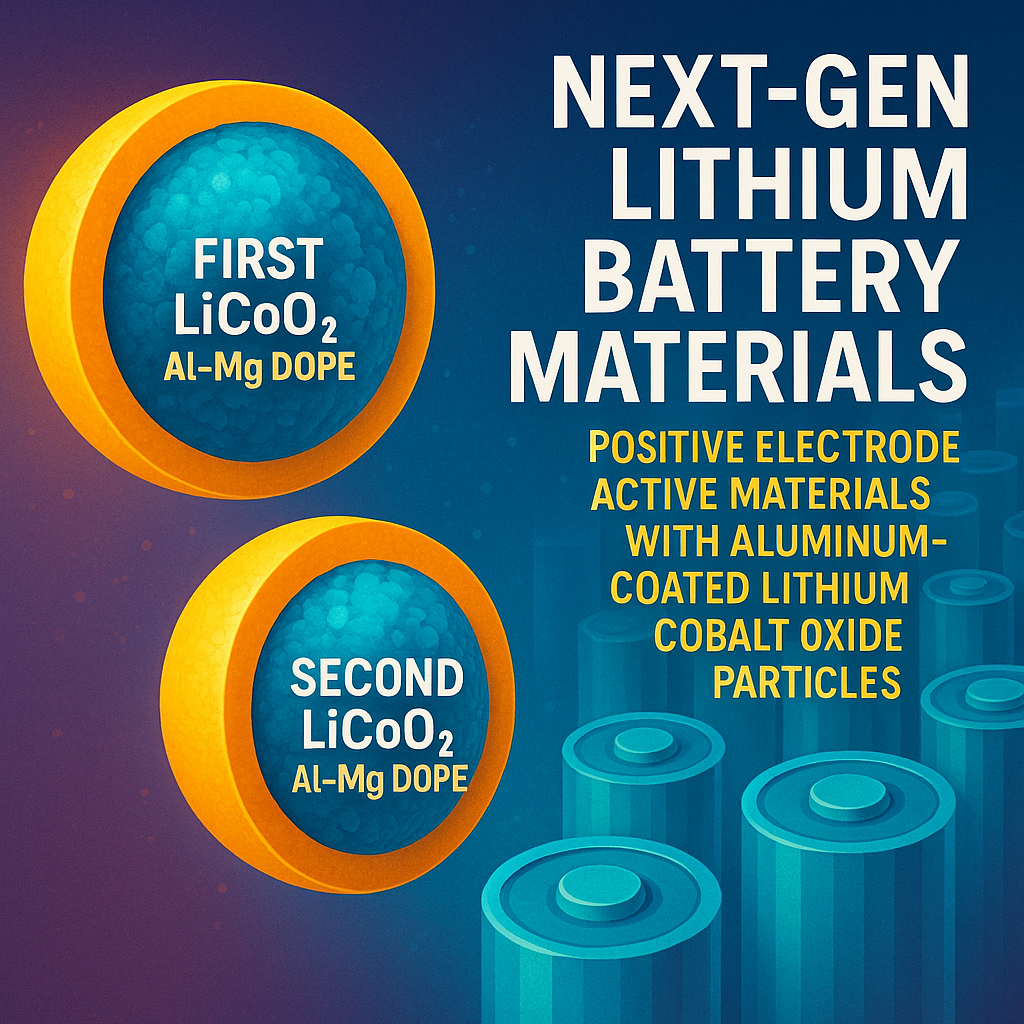
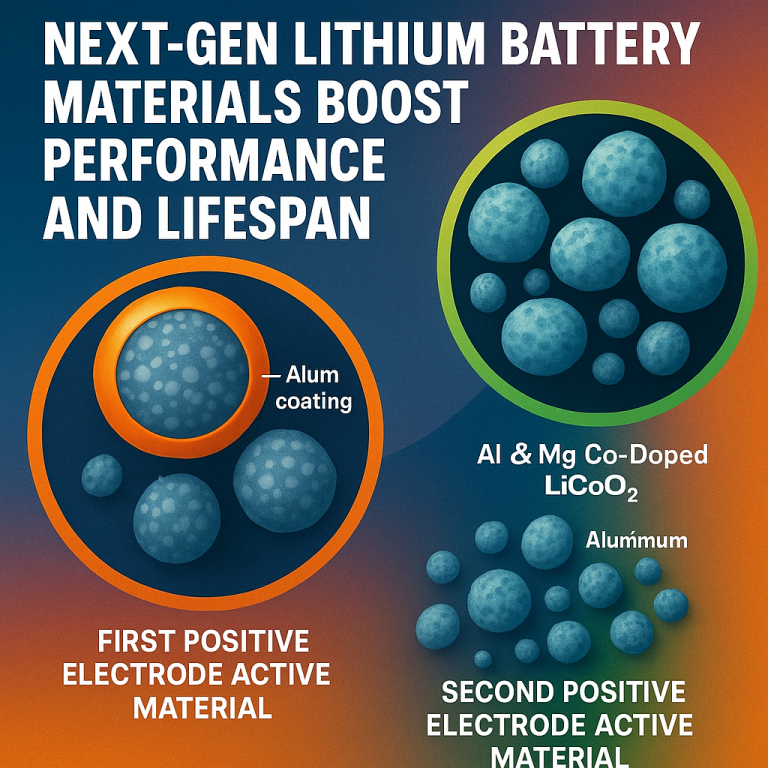
Now let’s dive into what this new patent claims and why it is different. The inventors have come up with a way to make a positive electrode material using two types of lithium cobalt oxide particles. Both types are doped with aluminum and magnesium, but they have different sizes and slightly different amounts of doping. The key is not just the mix of elements, but also how the surface of each particle is coated with aluminum.
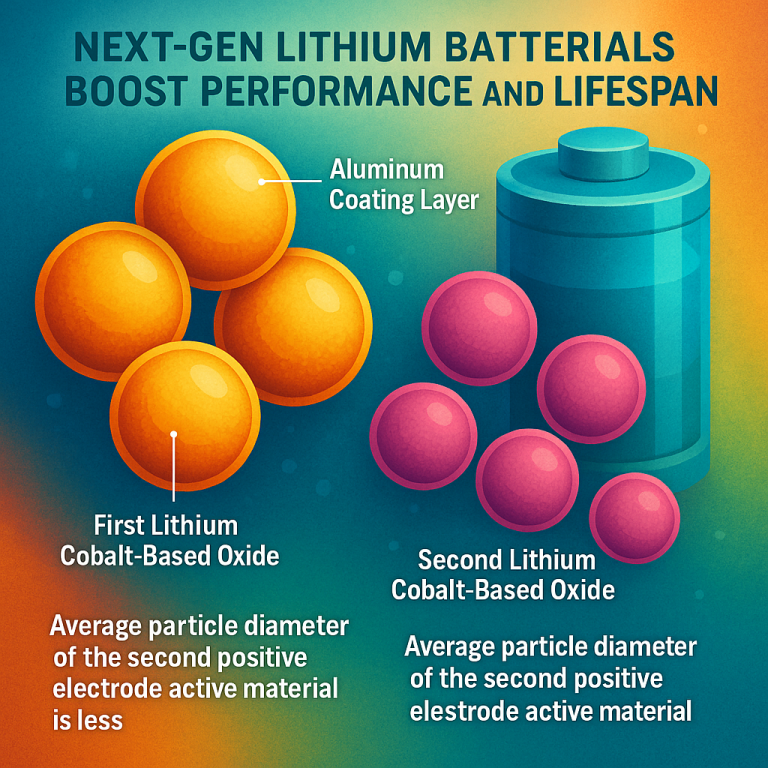
First, the invention uses two kinds of particles. The “first” particles are larger, about 7 to 30 micrometers in average diameter. The “second” particles are smaller, about 1 to 9 micrometers. Mixing large and small particles helps them pack together more tightly when making the electrode, which allows the battery to store more energy in the same amount of space.
Both types of particles are doped with aluminum and magnesium. This makes the inside of each particle more stable, especially when charging the battery to high voltages. The amount of aluminum and magnesium is carefully controlled to fall within a range that is just right for stability without hurting capacity.
The real breakthrough is in how the aluminum coating is applied to the surface of each particle. For the larger “first” particles, the coating is done using a wet process. Aluminum sulfate is dissolved in water to make a solution, and the particles are added to this solution. The particles are then dried and heat-treated at a temperature that keeps most of the aluminum on the surface as a thin, even layer. The coating forms a shell that completely surrounds each particle, but it is very thin (about 5 to 200 nanometers) and very uniform (the thickness barely varies from point to point).
This shell is not just a barrier; it is thin enough that it does not block the battery’s chemistry, but strong enough to protect the particle from reacting with the electrolyte. The inventors also control the amount of aluminum in this coating very precisely, aiming for a ratio of 6% to 10% aluminum to the total amount of cobalt and aluminum on the surface, as measured by a special analysis called energy-dispersive spectroscopy.
For the smaller “second” particles, a different method is used. Aluminum oxide is simply mixed with the particles and then heat-treated, creating a thin coating layer. The amount of aluminum and magnesium inside these smaller particles is also controlled, and in some cases, the smaller particles have even more aluminum doping than the larger ones. This can further improve stability and performance.
The final step is to mix these two types of coated particles together in the right ratio (from 50:50 up to 95:5 large to small, depending on the exact design). This allows the electrode to be packed very densely, which increases the energy storage while maintaining stability and safety even at high voltages.
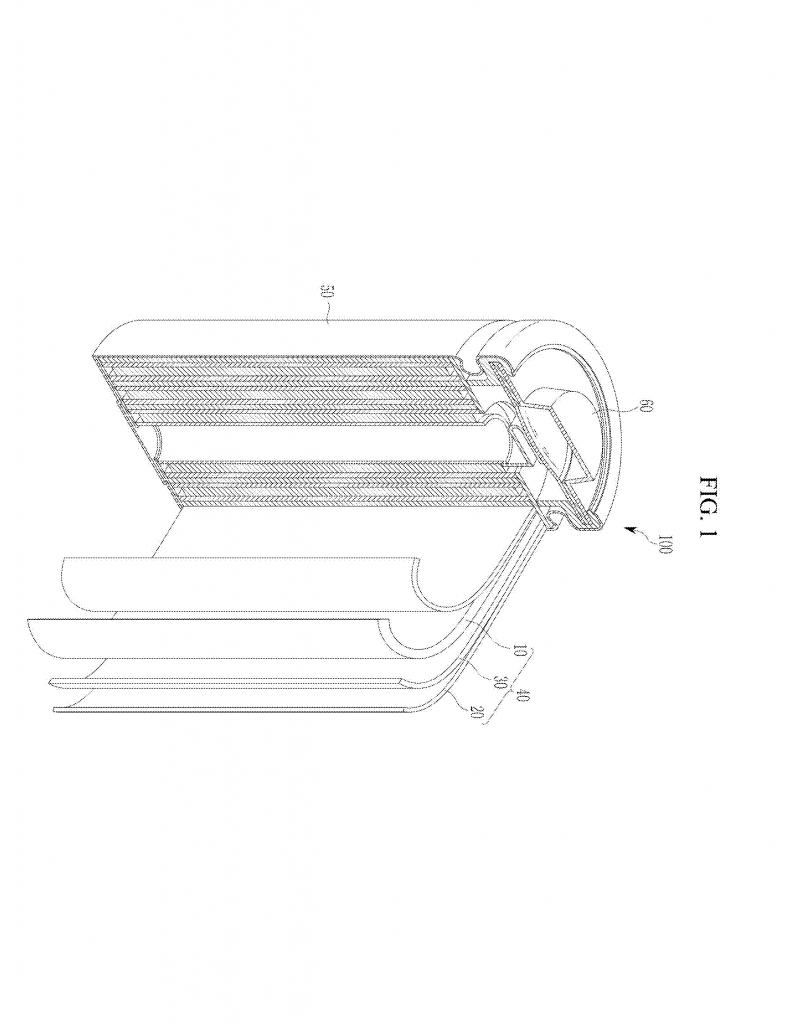
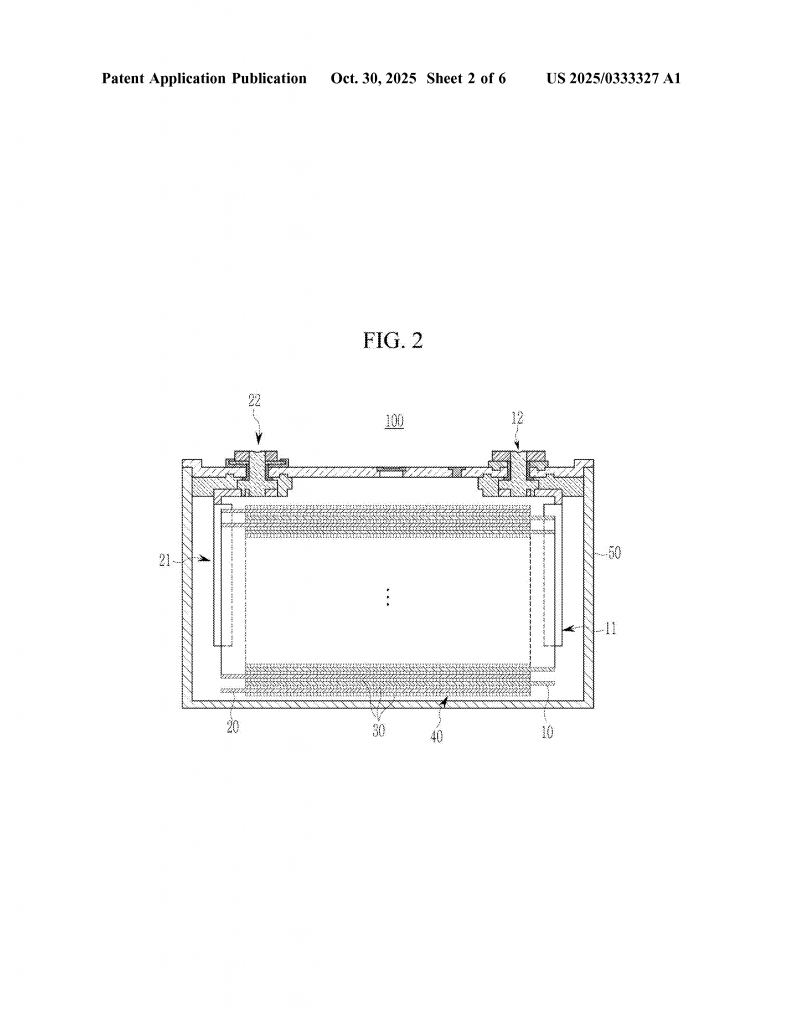
The inventors also describe how to make the electrode itself by mixing the coated particles with a binder (to hold everything together) and a conductive material (to help electrons flow). The resulting electrode is then pressed onto a metal foil (usually aluminum) and used in a standard lithium battery design.
When they tested these new materials in real batteries, they found several improvements:
– The batteries could be charged to higher voltages (up to 4.59 volts), which means more energy stored.
– The batteries lasted longer at high temperatures and high voltages, with less loss of capacity over many charge-discharge cycles.
– The batteries generated less gas, making them safer and more stable.
– The initial efficiency and resistance were very good, meaning the coatings did not block the battery’s normal function.
One of the keys to this success is the use of the wet coating method for the larger particles. This method creates a much more uniform and stable shell of aluminum on the surface, compared to older “dry” coating methods. The wet method allows better control over the coating thickness and composition, leading to better battery performance.
Another important point is the careful control of the doping levels and particle sizes. By mixing particles of two different sizes, the inventors can pack the electrode more tightly and get the right balance between energy storage and stability. The added magnesium and carefully tuned aluminum levels inside the particles keep the structure from breaking down, even under harsh charging conditions.
This patent also includes detailed steps for making the materials, including exact mixing times, temperatures, and concentrations. This makes it possible for manufacturers to reproduce the process with high consistency.
Conclusion
This new patent sets out a clear and innovative way to make positive electrode materials for lithium batteries that can be charged to higher voltages, store more energy, and last longer without losing safety or performance. By mixing two types of carefully doped and coated lithium cobalt oxide particles, and by using a wet coating method for a thin, uniform aluminum shell, the inventors have solved many of the problems that have limited previous battery designs.
For anyone working in battery technology—whether at a big company, a startup, or a research lab—these ideas are not just interesting; they are immediately useful. The methods described here can be put into practice using existing manufacturing tools, and the benefits are clear in terms of longer battery life, better safety, and more energy storage. As the demand for high-performance batteries continues to grow, this invention points the way forward for safer, more reliable, and more powerful energy storage solutions.
Click here https://ppubs.uspto.gov/pubwebapp/ and search 20250333327.