Invented by KIM; Sangmi, LEE; SOONREWL, KIM; Young-Ki, CHOI; Aram, DOO; Sungwook, KANG; Gwiwoon
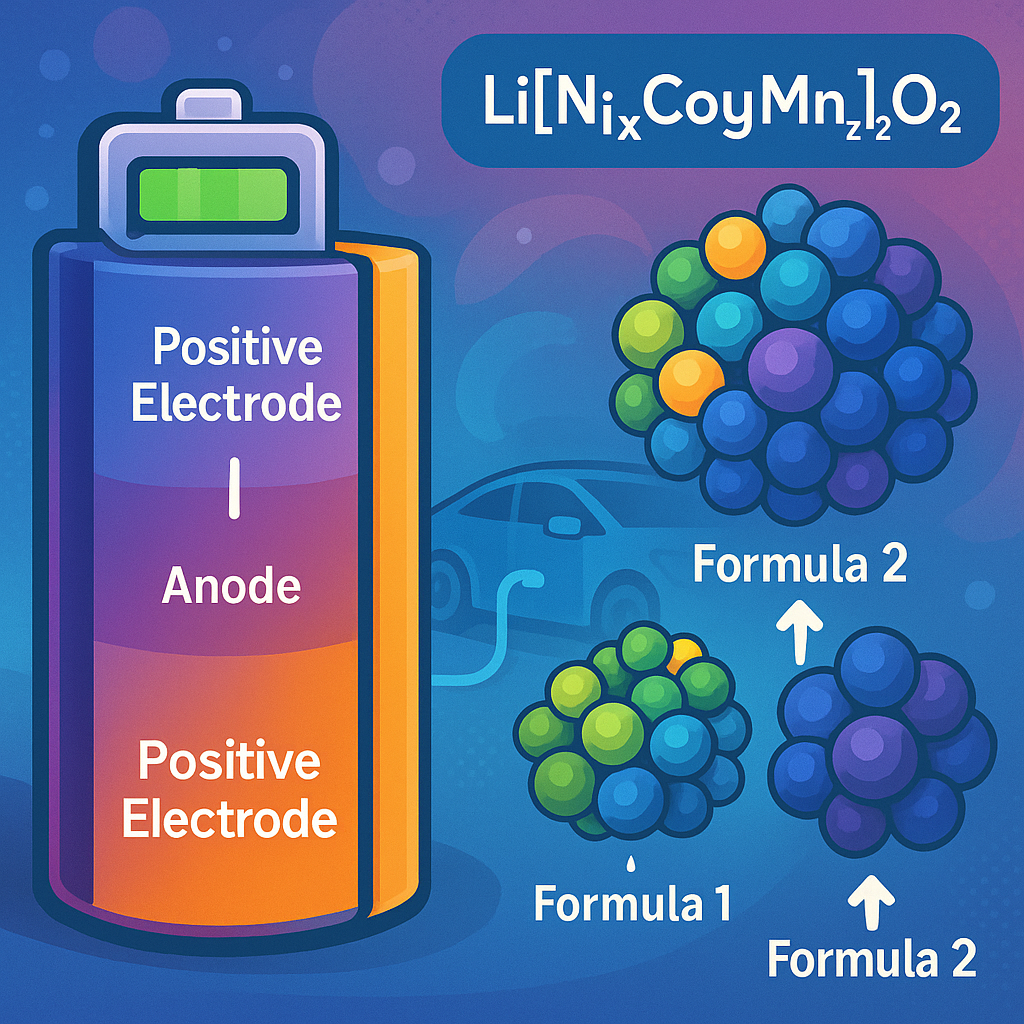
Rechargeable lithium batteries are everywhere, from smartphones to electric cars. The new patent application above introduces a fresh way to make the positive electrode material inside these batteries, promising higher energy, better stability, and longer life. In this post, we will break down what this invention means, why it matters, and how it compares to what came before it.
Background and Market Context
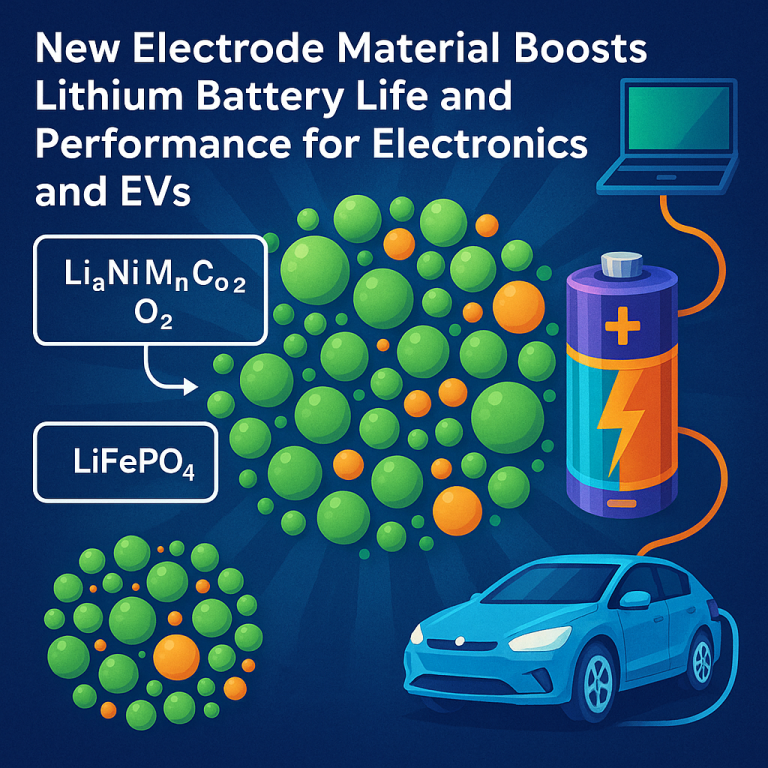
Rechargeable lithium batteries power many things in our daily lives: phones, laptops, electric scooters, and even cars. As more people use these devices, companies and scientists are looking for ways to make batteries that last longer, charge faster, and hold more energy. This is not just about convenience—better batteries can help fight climate change by making electric vehicles more practical and renewable energy storage more reliable.
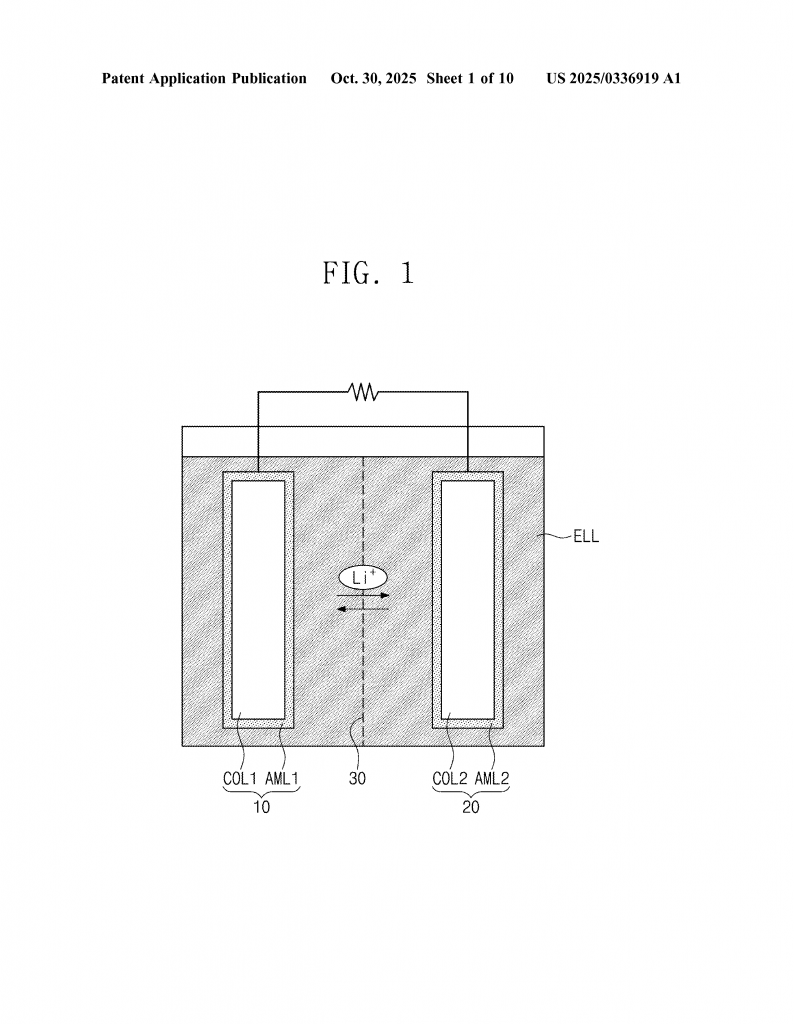
But making batteries better is not easy. The most important parts of a lithium battery are the electrodes—the positive and negative ends inside the battery where energy moves in and out. The positive electrode, also called the “cathode” or “active material,” is where much of the performance is decided. If the positive electrode can store more lithium ions and give them up more quickly, the whole battery works better.
Right now, battery makers use several types of positive electrode materials. Some are very stable and safe but can’t store much energy. Others store lots of energy but wear out too quickly or are not safe enough. For example, lithium iron phosphate (LFP) is safe and lasts a long time but does not store as much energy. Nickel-rich compounds, on the other hand, store more energy but can be less stable and are harder to make.
So, the battery industry is searching for new materials that combine the best features: high energy, good safety, long life, and reliable performance even in tough conditions. This is where the invention described in the patent comes in. It tries to find the right balance by mixing two different kinds of particles in the positive electrode, each with its own strengths.
Scientific Rationale and Prior Art
To understand what’s new here, we need to look at how lithium battery materials have developed over time. In the beginning, battery makers used simple compounds like lithium cobalt oxide. This material gave good energy density, but it was expensive and could be unsafe at high temperatures.
Then came lithium iron phosphate (LFP), which is much safer and cheaper. LFP has a special “olivine” structure that keeps the battery stable and safe, even if something goes wrong. But LFP can’t store as much energy as other materials and its voltage is a bit lower, so the devices don’t last as long on a charge.
To get more energy, scientists started using nickel, manganese, and cobalt in different mixes. These are called NMC or NCA materials. They can store more lithium ions and work at higher voltages, but they tend to wear out faster and may be less safe if not handled carefully. Also, making these materials is tricky—they need careful mixing and baking at high temperatures to get the right crystal shapes. The higher the nickel content, the more energy the material holds, but the harder it is to keep stable.
Another challenge is conductivity—how well the material lets electricity flow. Some compounds, like LFP, are not very conductive, so battery makers add coatings (like tiny layers of carbon) to help the electrons move faster. Particle size also matters. Smaller particles can help the battery charge and discharge faster, but they can be hard to handle in manufacturing and may need more binder to stick together.
Over the years, researchers tried to solve these problems by adding coatings, mixing different metals, and making particles in new shapes and sizes. Some patents describe using two or more kinds of particles together, but usually, all the particles are about the same size, or the mix is not designed to balance the strengths and weaknesses of each type.
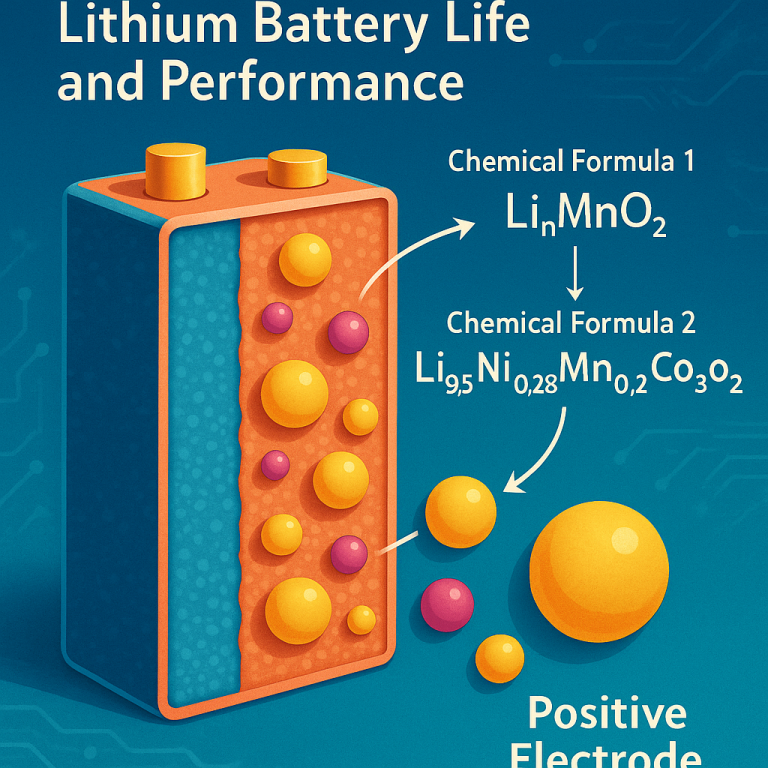
This invention builds on those past ideas but adds a new twist. It mixes two very different types of particles, each with its own size, structure, and coating. The first is an “olivine” particle based on manganese and iron, coated with carbon. The second is a larger, nickel-based particle with a special coating of boron or aluminum compounds. By carefully choosing the ratio and size of these particles, the inventors aim to get a battery that has high energy, long life, good safety, and can be made using existing factory methods.
Invention Description and Key Innovations
Now let’s dive into what makes this new positive electrode material special. The inventors combine two types of particles, each bringing something important to the table.
First Particle: Small Olivine-Type
The first kind of particle is based on a manganese-iron-phosphate compound, known as an olivine structure. These particles are quite small—usually around 100 nanometers to 2.5 micrometers. They have a thin carbon coating to help electrons move easily. Because of the olivine structure and added manganese, these particles are very stable and safe. They help the battery last a long time and avoid overheating or catching fire. However, by themselves, they do not store as much energy as some other materials.
Second Particle: Larger Nickel-Based
The second kind of particle is based on nickel, manganese, and cobalt, or sometimes other metals like aluminum or magnesium. These particles are bigger—between 2 and 5 micrometers—and have a special coating made from boron or aluminum compounds. Nickel-based particles can hold more lithium ions, so the battery can store more energy and give it up faster. The coating helps keep the particles stable during repeated charging and discharging, which usually makes nickel-based materials wear out quickly.
Mixing Ratios Matter
The real trick is how these two particles are mixed together. The patent describes different ratios, usually with more of the small olivine particles than the large nickel-based ones. Ratios like 90:10 or 70:30 (first to second particle) are used. By adjusting this ratio, the inventors can balance capacity (how much energy the battery holds), voltage (how strong the battery is), and life span (how many times it can be charged and discharged before wearing out).

Why Two Sizes?
Using two particle sizes helps with both performance and manufacturing. Small particles have more surface area, letting lithium ions move in and out quickly. But they can be hard to stick together in the electrode and may need more binder. Larger particles are easier to handle and help make the electrode dense, so more active material fits in the same space. By mixing both, the electrode can be packed tightly but still lets lithium move easily, making the battery both powerful and long-lasting.
Special Coatings
The coatings on both types of particles are important. The carbon coating on the olivine particles boosts conductivity, helping electrons flow during charging and discharging. The boron or aluminum coating on the nickel-based particles protects them from breaking down over time, especially under high voltage or many charge cycles.
Improved Battery Performance
Batteries made with this mixed material show several key improvements:
- Higher capacity compared to traditional LFP batteries
- Stable voltage, which means devices can use more of the stored energy before needing a recharge
- High pellet density, so more energy fits in less space
- Excellent performance at both normal and higher temperatures
- Long life, with less capacity loss over many cycles
Tests described in the patent show that as more of the nickel-based particles are added, the battery holds more energy, but the stability and safety from the olivine particles are still preserved. The result is a battery that approaches the energy of high-nickel types but keeps the safety and long life of olivine types.
Easy Manufacturing
An important part of this invention is that it can be made using standard factory methods. The particles are made by mixing, grinding, drying, and baking common materials. The coatings are applied using simple wet or dry processes, and the final electrode is made using regular binders and conductive agents.
Actionable Insights
If you are making batteries or designing devices that use them, this new material could be a game-changer. It offers a clear path to making batteries that are safer, last longer, and can handle more demanding applications—like electric vehicles or large-scale energy storage for solar and wind power. Because the method uses common elements and simple processes, it could scale up quickly without huge new investments in equipment.
Conclusion
This new positive electrode material for rechargeable lithium batteries brings together the best of two worlds: the safety and stability of olivine-based compounds and the high capacity of nickel-rich materials. By carefully mixing two types of coated particles at different sizes, the inventors have created a battery material that delivers more energy, lasts longer, and can be made using existing factory methods. As the world moves toward more electric vehicles and renewable energy, advances like this will help batteries keep up with our growing needs—making our devices, cars, and homes more reliable and sustainable.
Click here https://ppubs.uspto.gov/pubwebapp/ and search 20250336919.