
Invented by KIM; Young-Ki, CHOI; Aram, KIM; Sangmi, DOO; Sungwook, KANG; Gwiwoon, LEE; Soonrewl
It’s easy to take batteries for granted. They power our phones, cars, and so much more. But inside every battery, there’s a lot of science and engineering at work. Today we will look closely at a patent for a new kind of lithium battery positive electrode—one that promises to make batteries more powerful, last longer, and be easier to make. Let’s dig deep and see what makes this invention special, how it fits into the market, and why the science matters.
Background and Market Context
People use rechargeable lithium batteries every day. Our phones, laptops, electric cars, and even some power tools run on them. Over the past 20 years, the world has become more electric. With that, the need for batteries that store more energy, work longer, and are safer has grown a lot.
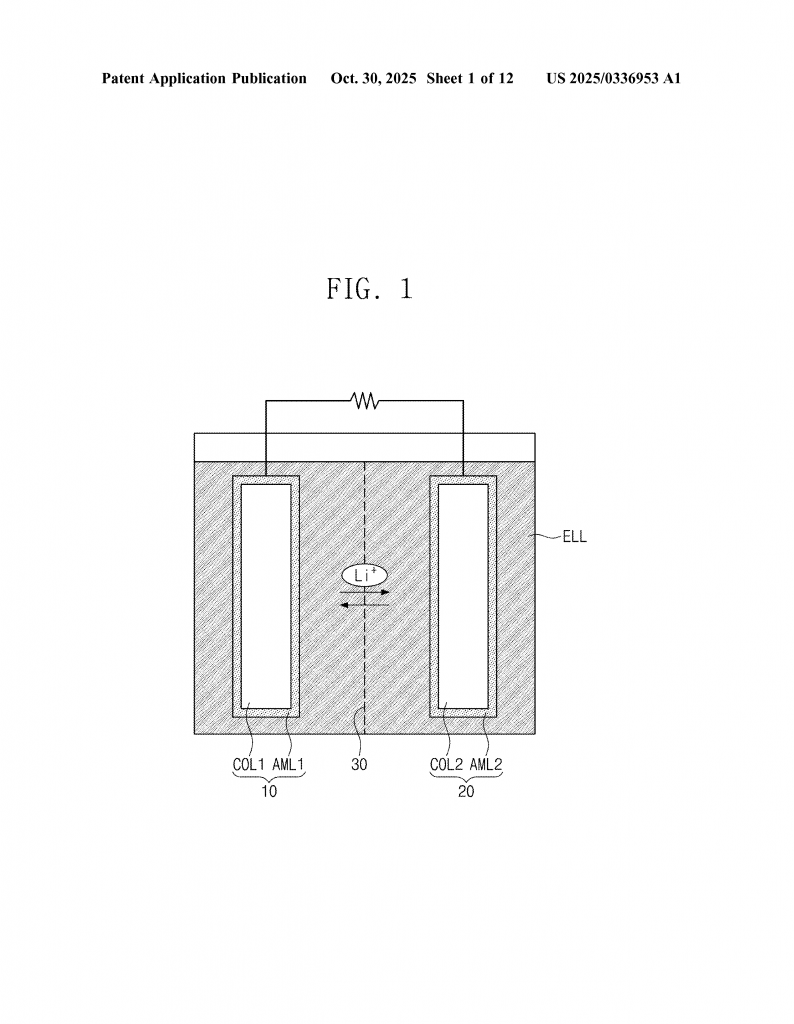
Companies are always looking for ways to make better batteries. A battery’s heart is its electrodes: the positive (cathode) and negative (anode) parts. When a battery charges or discharges, lithium ions move between these two. The positive electrode’s make-up can change how much energy the battery holds, how long it lasts, and how easy it is to make.
Right now, many batteries use materials like lithium cobalt oxide or lithium iron phosphate for the positive side. Each has its strengths and weaknesses. Some are cheap and safe but don’t store as much energy. Others hold more energy but cost more or don’t last as long. As electric cars and big gadgets become more common, there’s a push for batteries that do it all—high energy, low cost, and long life.
This patent tries to answer that call. It introduces a positive electrode that mixes different materials together in a special way. The goal? To get the benefits of each material and avoid their problems. The approach is to make an electrode that is easy to make, sticks well to the metal sheet inside the battery (the current collector), and helps the battery store more energy and last longer.
There is a huge market for any new battery technology that can do this. Car makers want batteries that are cheaper and safer. Phone makers want batteries that last longer. And companies building big solar and wind power banks want batteries that can handle lots of cycles without failing. So, the impact of this invention, if it works as promised, could be big.
Scientific Rationale and Prior Art

To understand why this new battery electrode matters, it helps to look at what came before it. Let’s keep the science simple.
Batteries store and release energy by moving lithium ions between two electrodes. The positive electrode is often a mix of tiny particles that can grab and release lithium ions as the battery charges and discharges. The type of particles and how they are put together makes a big difference.
Some popular positive electrode materials are:
– Lithium iron phosphate (LFP): Safe, cheap, long-lasting, but lower energy.
– Nickel-rich layered oxides (like NCA or NCM): High energy, but cost more and can be less stable.
– Combinations of the above, sometimes with coatings or mixing different particle sizes.
Earlier patents and products tried mixing these materials to get both high energy and long life. Some used coatings of carbon or metals to help the particles move electricity better. Others tried to change the size or shape of the particles to make the electrode stick better to the collector inside the battery, or to pack more active material in a small space.
But there are trade-offs. Small particles stick well and let the battery charge fast, but they need more glue (binder) to hold together, which can lower the energy stored. Big particles pack more energy but can fall off the collector or crack over time. Mixing materials can help, but getting the mix just right is tough. Some inventions used single layers, while others tried stacking two or more layers, each with a different mix of particles.
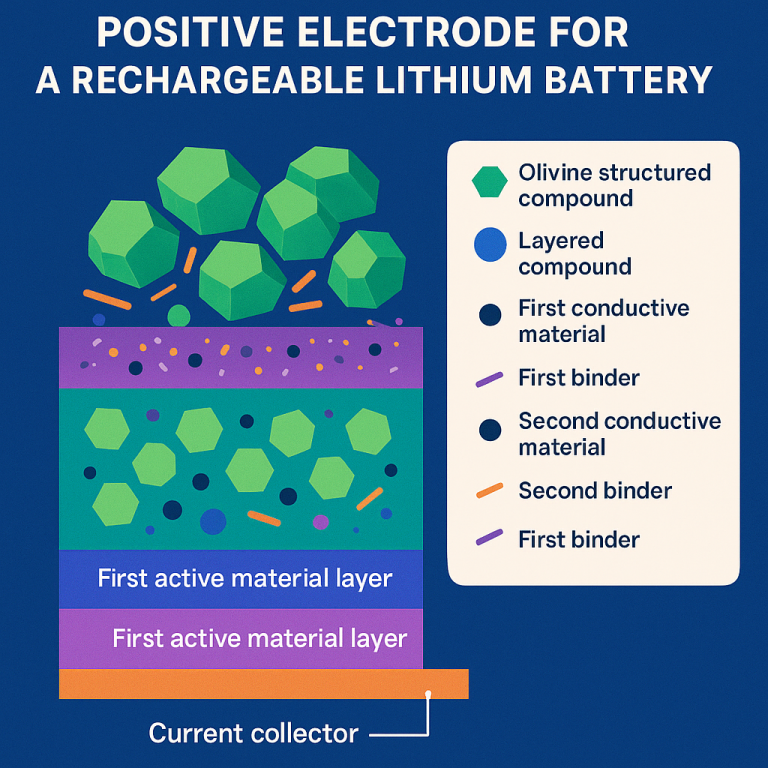
This new patent builds on these ideas. It uses two different layers, each with its own special recipe. The bottom layer (next to the collector) uses single particles of olivine-structured compounds and some layered compounds. The top layer uses bigger, secondary particles made by clumping together smaller ones. Both layers use a mix of binders and conductive materials, but in different amounts. The ratios and layer thickness are chosen very carefully. The inventors also play with how much carbon coats each type of particle. The aim is to get an electrode that sticks well, is easy to make, holds lots of energy, and keeps working after many cycles.
This approach isn’t random. The science shows that by mixing particle types and controlling the binder and conductor ratios, you can improve both the energy and the life of the battery. Layering lets you use the strengths of each particle type where it matters most—strong adhesion at the bottom, lots of energy storage at the top.
Prior art has shown the value of using olivine and layered compounds. It has also shown that mixing particle sizes can improve performance. What’s new here is the exact way the inventors mix and layer these particles, and how they tune the recipe for each layer. They also optimize the amount of glue and conductor in each layer to get just the right balance.
Invention Description and Key Innovations
Now, let’s break down what’s really new and clever in this patent. This is where the invention shines.
The positive electrode in this patent isn’t just a random mix of stuff. It’s a careful, two-layer design:
First Active Material Layer (next to the collector):
This layer uses single particles of an olivine-structured compound (think lithium iron phosphate with a twist). It also adds some layered compound particles (nickel-rich, like NCA). These particles are chosen for their size, shape, and surface area. The single olivine particles stick well to the collector, making a strong base. The layered compounds boost the energy stored. The layer also contains a “first functional additive”—a mix of binder (to glue things together) and a conductive material (to help electricity flow). The amount of binder and conductor is kept low, so you can pack in more active material.
Second Active Material Layer (on top):
This layer uses secondary particles—these are clumps of smaller olivine-structured particles. The clumps (secondary particles) are bigger and have lots of tiny grains inside. This structure helps reduce resistance and makes it easier for lithium ions to move in and out. The layer also has its own “second functional additive”—again, a binder and a conductive material, but in a higher ratio than the first layer. This helps the bigger clumps stick together and to the layer underneath.

What’s special about the ratios?
The inventors found that the best performance comes when the amount of binder and conductor in the second layer is about 1 to 2 times the amount in the first layer. If you use too little, the layers won’t stick; too much, and you lose space for active material. The thickness of each layer is also important, and the best results come when the two layers are about the same thickness, or one is not more than twice as thick as the other.
Particle Sizes and Forms:
The bottom layer uses small, single olivine particles (about 0.5 to 2.5 microns wide) plus some layered compound particles. The layered ones can be either single particles or secondary particles (clumps), and the inventors show that mixing both forms (a “bimodal” mix) can help pack the layer more densely.
The top layer uses larger secondary particles (3 to 7 microns wide, made up of many 100-200 nanometer grains). This layer is more porous (20-40% porosity), which helps ions move fast and makes the battery charge and discharge more easily.
Carbon Coatings:
Both the single and secondary olivine particles have a thin layer of carbon on their surface. The top layer’s particles have a bit more carbon, which helps them conduct electricity better. This is important because bigger particles can sometimes have trouble conducting, so the extra carbon helps.
Functional Additives:
The “functional additive” idea is key. Each layer gets its own blend of binder and conductor, in amounts tuned to match the particles in that layer. This isn’t just dumping in glue or black powder—it’s about getting just the right amount for each layer to keep everything together and working well.
Mixing Ratios:
The exact mix of olivine and layered compounds is important. The patent suggests about 30-40% first olivine particles, 10-30% layered compounds, and 30-40% secondary olivine particles. This balance gives good energy, power, and long life.
Manufacturing Benefits:
Because the bottom layer sticks well to the collector, the electrode is easy to make and doesn’t fall apart. The top layer, with its big, porous particles, holds lots of energy and lets ions move quickly. This layered approach also means you can use less binder overall, which lets you pack more active material into the electrode.
Battery Performance:
The inventors didn’t just guess. They made real batteries with this design and compared them to standard designs. The new electrodes gave batteries with high energy, good capacity at cold temperatures, low internal resistance, and long life. The batteries were also easy to make and held together well.
This is more than just mixing some powders. It’s a system for building a better battery electrode by carefully choosing and layering different particles, tuning the glue and conductor for each layer, and balancing the ratios for best performance.
Conclusion
This patent shows a smart way to build a better positive electrode for lithium batteries. By using two layers, each with its own mix of particles and additives, the inventors get the best of both worlds: strong adhesion, high energy, and long life. They fine-tune the size and type of each particle, add just the right amount of glue and conductor, and use carbon coatings to make everything work together. The result is a battery electrode that could help power the next generation of phones, cars, and more.
For anyone making batteries, this invention offers a clear path to better performance without making manufacturing harder. And for the rest of us, it means our devices and cars could soon last longer between charges and work better in all conditions. This is how science and smart engineering come together to power our world.
Click here https://ppubs.uspto.gov/pubwebapp/ and search 20250336953.