Invented by NEUHAUS; Ekkehard, BELLIN; Leo, SONNEWALD; Uwe, ZIERER; Wolfgang, GRUISSEM; Wilhelm, University of Kaiserslautern-Landau
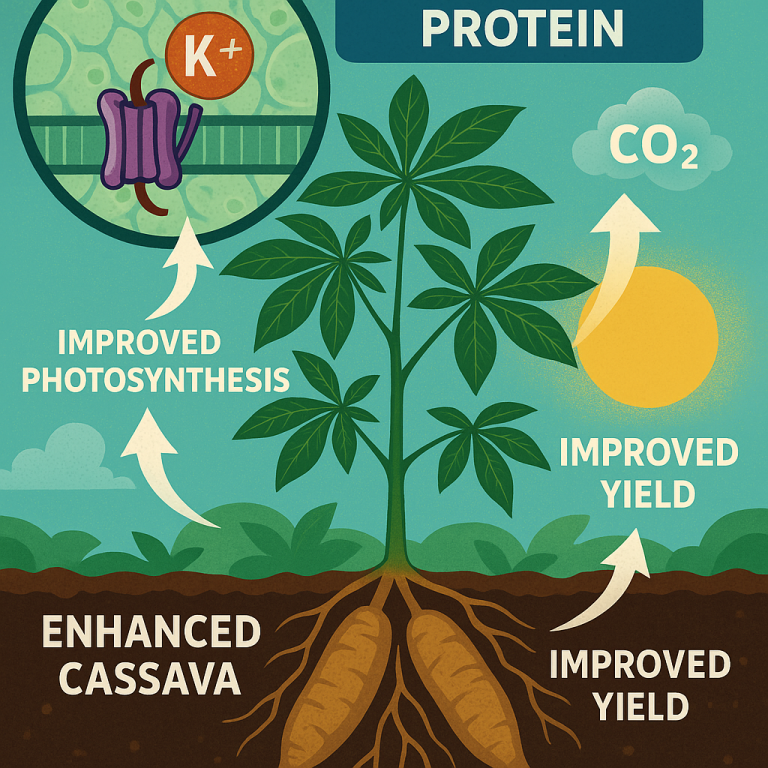
If you want your crops to grow bigger, store more food, and handle drought better, understanding plant potassium transport is key. Recent patent filings show that changing a protein called AKT2 inside plant cells can help crops, like cassava and potatoes, use food and water more wisely. This article explains what this means for farmers, scientists, and anyone who wants to know how new plant science can make a difference in food production.
Background and Market Context
Today, feeding people is harder than ever. Farmers need to grow more food, even as weather becomes less predictable, water becomes scarce, and soils are tired from years of planting. Many of the world’s most important crops, like cassava, potatoes, and sweet potatoes, grow their food storage organs underground. These roots and tubers are staples for billions of people across Africa, Asia, and Latin America.

These crops have a challenge: they need to move sugars and nutrients from the leaves, where photosynthesis happens, down to the roots, where they store food. This journey is long—sometimes over a meter—and is powered by the plant’s own transport system, called the phloem. But moving all that sugar and energy isn’t easy. It takes a lot of potassium, an important nutrient, to keep the flow going and maintain healthy plant growth.
Farmers already know that adding potassium fertilizer can help. When there’s enough potassium in the soil, plants get taller, make more leaves, and store more in their roots. But fertilizer is expensive and not always available, especially for small farmers. And when drought hits, even fertilizer may not help unless the plant can keep moving food to where it’s needed most. That’s why scientists are searching for genetic ways to help plants use potassium more efficiently, especially during tough times.
At the center of this effort is a protein called POTASSIUM TRANSPORTER 2, or AKT2. It acts like a gatekeeper, helping potassium flow in and out of plant cells. By changing how this protein works, researchers hope to help plants move sugars and potassium faster and farther—even when water or nutrients are hard to come by. If it works, crops could grow more food with less fertilizer, survive dry spells, and give bigger harvests. This would be a game changer for farmers everywhere.
Scientific Rationale and Prior Art
To understand why changing AKT2 matters, we need to look at what potassium does in plants. Potassium is not just a nutrient; it drives many key processes. It helps keep cells full of water, helps enzymes work, and most importantly, keeps the plant’s transport system—the phloem—moving sugars from leaves to roots. When potassium is low, plants wilt, grow slowly, and store less food in their roots.
In the past, studies showed that giving plants more potassium could boost growth. For example, cassava plants given extra potassium made more and bigger storage roots. Other research found that during drought, potassium helped move sugars even when leaves were stressed. It was also discovered that potassium in the phloem could act like a “battery,” storing energy that the plant could use to move sugars uphill, against a concentration gradient, toward storage organs.
Proteins like AKT2 are at the heart of this process. AKT2 forms channels in the membranes of plant cells, especially in the phloem and xylem—the plant’s transport highways. These channels allow potassium ions (K+) to flow in and out of cells. What makes AKT2 special is that it can work in two modes: one where it lets potassium flow in (like filling a bucket), and another where it lets potassium flow in both directions (like a door that swings both ways). This flexibility is important for balancing the plant’s needs as it moves food and nutrients around.
Earlier research in Arabidopsis, a model plant, showed that changing two small parts of the AKT2 protein (specifically, swapping two amino acids) could “lock” the protein in its two-way mode. This made the plant better at moving potassium and sugars, especially during stress. But until now, it wasn’t clear if the same trick would help important food crops like cassava, which have different ways of moving sugars and need to move them over longer distances.
Other genetic changes to potassium channels, like AKT1, mostly affected how roots pulled potassium from the soil. But AKT2 is more about moving potassium inside the plant, especially from shoots to roots. The idea is that by tweaking AKT2, we could help the plant do more with the same amount of potassium, making it stronger and more productive without always needing more fertilizer.
Before this patent, most work with AKT2 focused on model plants or on adding more potassium to the soil. The new invention takes things further, using genetic engineering to boost or change AKT2 in crops that matter for food security. It also looks at using special promoters to make sure the changes happen where they’re needed—in the plant’s transport tissues. This is a big step forward from just adding fertilizer or making random genetic changes.
Invention Description and Key Innovations
The new invention is all about giving plants a better way to move potassium and sugars by changing or overexpressing the AKT2 protein. The patent application covers many ways to do this, but the core ideas are simple and powerful.
1. Genetically Modified AKT2 Proteins
The invention creates plants where AKT2—the potassium channel—has been genetically changed. These changes are small: swapping out a couple of building blocks (amino acids) in the protein. The patent shows that when two serines (S210 and S329 in Arabidopsis) are changed to asparagine, AKT2 gets “locked” into a mode where it can move potassium both in and out of the cell. This makes it easier for the plant to use potassium as an energy source to move sugars where they’re needed, especially to storage roots or tubers.
The invention is not just for Arabidopsis. It covers changes to AKT2 in many crops, including cassava (MeAKT2a and MeAKT2b), potatoes, sweet potatoes, yams, and more. The patent includes the exact DNA and protein sequences, so other researchers or companies know which parts to change.
2. Overexpression Strategies
Besides changing the protein, the invention also covers making more of it. By adding strong promoters—pieces of DNA that tell the plant to make lots of a certain protein—the inventors can boost the amount of AKT2 in the key tissues (like the phloem and xylem). Some promoters are always “on” (for general boosting), while others are tissue-specific, like those from the plant’s own AKT2 or sucrose transporter genes. This means the changes happen right where they’ll do the most good, without wasting energy or causing problems in other parts of the plant.
3. Flexible Application Across Crops and Conditions
The patent makes it clear that this approach works for many types of plants, especially those with big storage
Click here https://ppubs.uspto.gov/pubwebapp/ and search 20250361514.