Invented by Rothbaum; Wayne, Myers; Reg, Telios Pharma Inc.
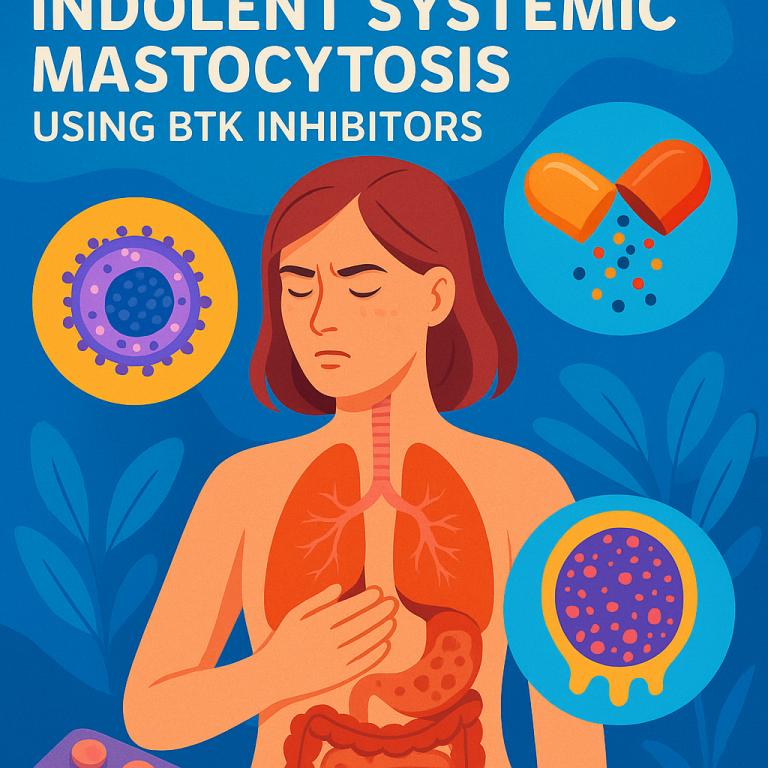
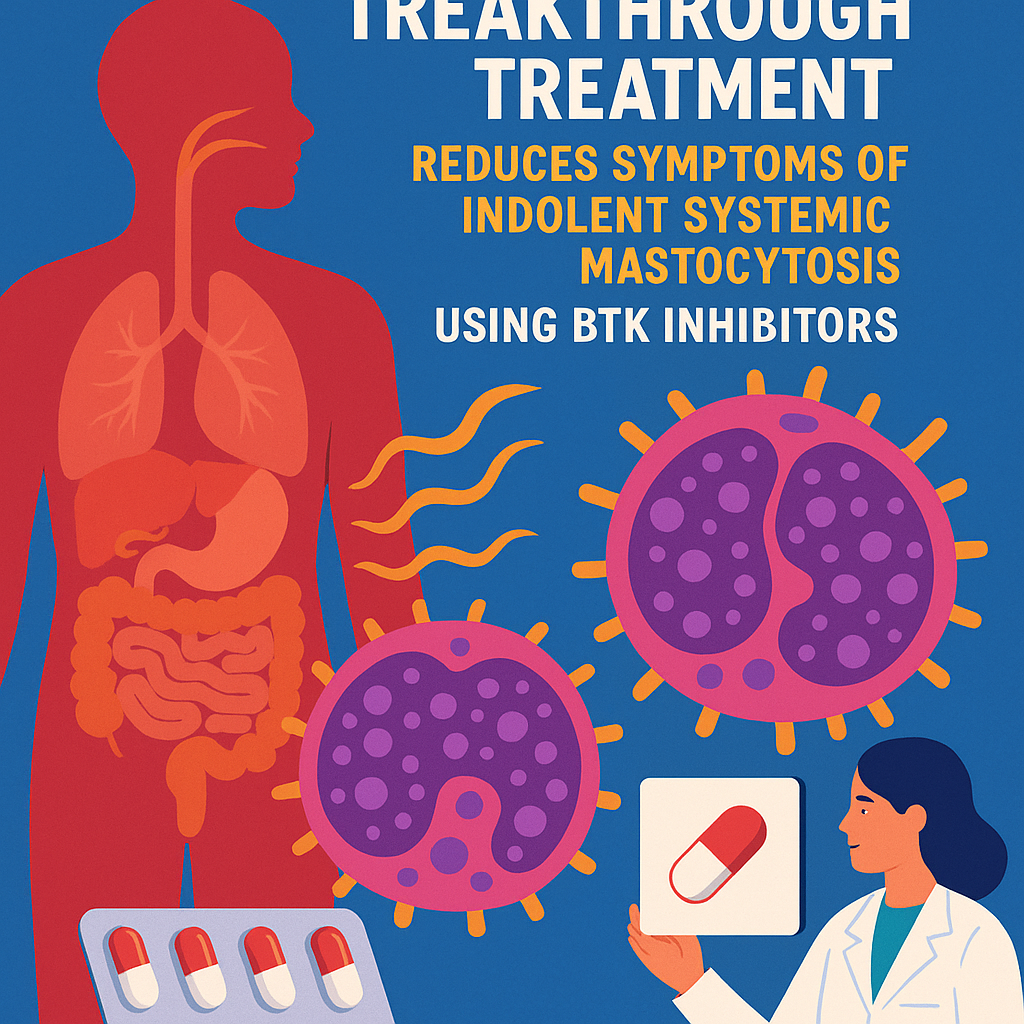
Indolent Systemic Mastocytosis (ISM) brings daily struggles for people living with it. For a long time, there haven’t been good answers for these patients. Now, there’s exciting news: a special kind of medicine, called a Bruton’s Tyrosine Kinase (BTK) inhibitor, might help. Let’s break down what this means, why it matters, and how this new idea could finally relieve symptoms and improve lives.
Background and Market Context
Indolent Systemic Mastocytosis, or ISM, is a rare blood disorder that makes people’s bodies produce too many mast cells. Mast cells are a kind of immune cell, and in ISM, they build up in tissues like the skin, bone marrow, liver, and gut. When they get triggered, they release chemicals such as histamine, causing symptoms like flushing, itching, stomach pain, diarrhea, headaches, and tiredness. These symptoms can be so bad that people can’t work or enjoy daily life, even though the disease itself usually isn’t life-threatening.
ISM is different from more dangerous types of mastocytosis that can damage organs or lead to cancer. Most people with ISM live almost as long as people without it. But even if it doesn’t shorten life, ISM can make life very hard because symptoms come and go, are hard to control, and can be very severe. The current treatments are mostly over-the-counter allergy medicines, like antihistamines, and some other drugs that block chemicals from mast cells. These help a little, but they don’t fix the problem or stop all the symptoms.
Doctors have tried medicines meant for the advanced forms of mastocytosis, which target a mutated gene called KIT D816V. One such medicine, avapritinib, was tested for ISM, but it only helped some people and sometimes caused side effects. Many patients still felt sick, even on the medicine. There are also safety worries with other drugs in this space—some cause heart problems, bleeding, or other serious reactions. Clearly, there’s a big need for a better, safer way to help people with ISM feel well enough to work, socialize, and enjoy life.
This is where the new BTK inhibitor comes in. If it works as hoped, it could be the first medicine that truly controls the symptoms of ISM, allowing people to get back to normal activities and giving them hope for real relief.
Scientific Rationale and Prior Art
To see why this new idea is so promising, it helps to understand what’s been tried before and why it hasn’t worked well. In ISM, mast cells misbehave because of a change in a gene called KIT, most often a mutation called D816V. This mutation makes mast cells grow and release their chemical messengers far too easily—sometimes even without a clear trigger. These chemical messengers, like histamine, cause the itching, stomach problems, and other symptoms people feel.
Most of the old treatments try to stop the symptoms after they start. Antihistamines, for example, block histamine after it’s released. Some newer drugs try to block the KIT mutation directly, so the mast cells don’t keep growing. Avapritinib is one of these drugs. But these medicines have two big problems: they don’t stop all the symptoms (because mast cells still get triggered and release stuff), and they can cause bad side effects. Often, the doses needed to really help with ISM symptoms are too strong for the body to handle safely.
Another medicine, dasatinib, was also tested. It blocks several cell signals, including KIT and BTK (Bruton’s Tyrosine Kinase), but it led to side effects like fluid collection around the lungs and had to be stopped in many people. So, while these drugs can slow down mast cells, they haven’t solved the main problem: too many symptoms, too much risk.
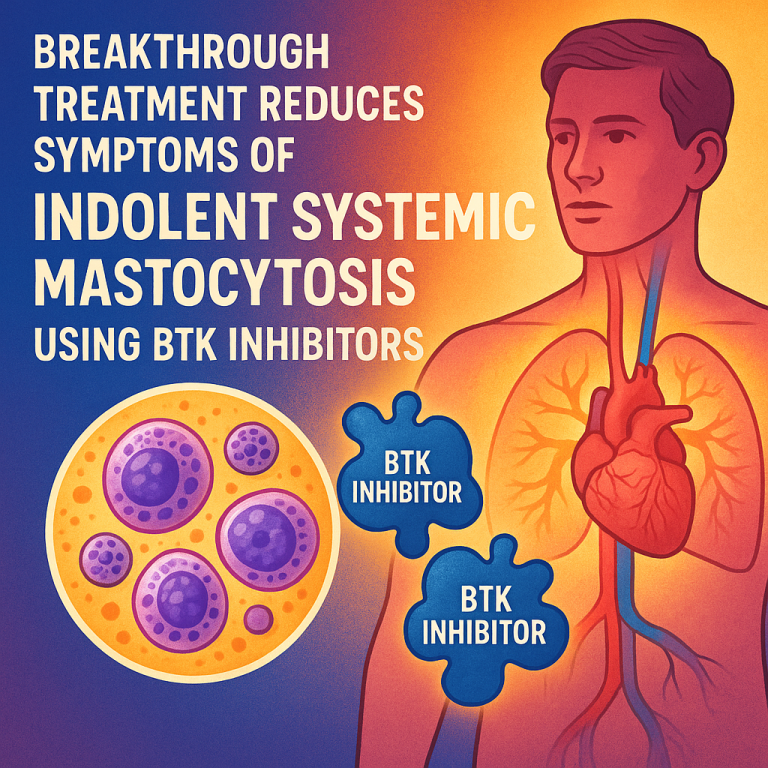
The new approach looks at a different target: BTK. This protein is a key part of the chain reaction inside mast cells and basophils (another immune cell) when they get triggered by things like allergies. When BTK is activated, it causes these cells to dump their chemical messengers into the body. If you block BTK, you can stop this dump from happening in the first place. This means less histamine, less inflammation, and fewer symptoms—even before they start.
Scientists also realized that in ISM, mast cells are extra sensitive. They can be triggered by very small things, and sometimes even by IgE, a type of antibody, without anything else present. This is partly because the KIT mutation and the IgE pathway work together, making the mast cells “twitchy.” Blocking BTK interrupts this teamwork, calming the cells down.
There are other BTK blockers out there, but most were made for cancer and have side effects that are too harsh for people with ISM. The new BTK inhibitor described here is different: it’s designed to be powerful against mast cell signals but gentle enough for long-term use. Tests show it can block mast cell and basophil activation, and reduce the release of many chemical messengers, not just histamine. This could make it much better at actually stopping symptoms before they start.
Invention Description and Key Innovations
This patent application is about a new way to treat ISM using a special BTK inhibitor, called Compound 128 (or CP-128). Here’s how it works and what makes it special.
First, Compound 128 is given by mouth, making it easy for people to take at home. The medicine is designed so that after you swallow it, enough of it gets into your blood (at least 125 ng/ml, sometimes higher), which is important for it to work well. The right amount in the blood stops the mast cells and basophils from getting triggered and releasing their bad chemicals.
The BTK inhibitor stops the pathway that leads both mast cells and basophils to “degranulate”—that is, to dump out histamine, cytokines, and other chemicals that cause symptoms. This means the medicine can lower many symptoms, not just one. It works whether or not a person has the KIT D816V mutation. It also helps people who have tried other ISM treatments and didn’t get better, or who never had treatment before.
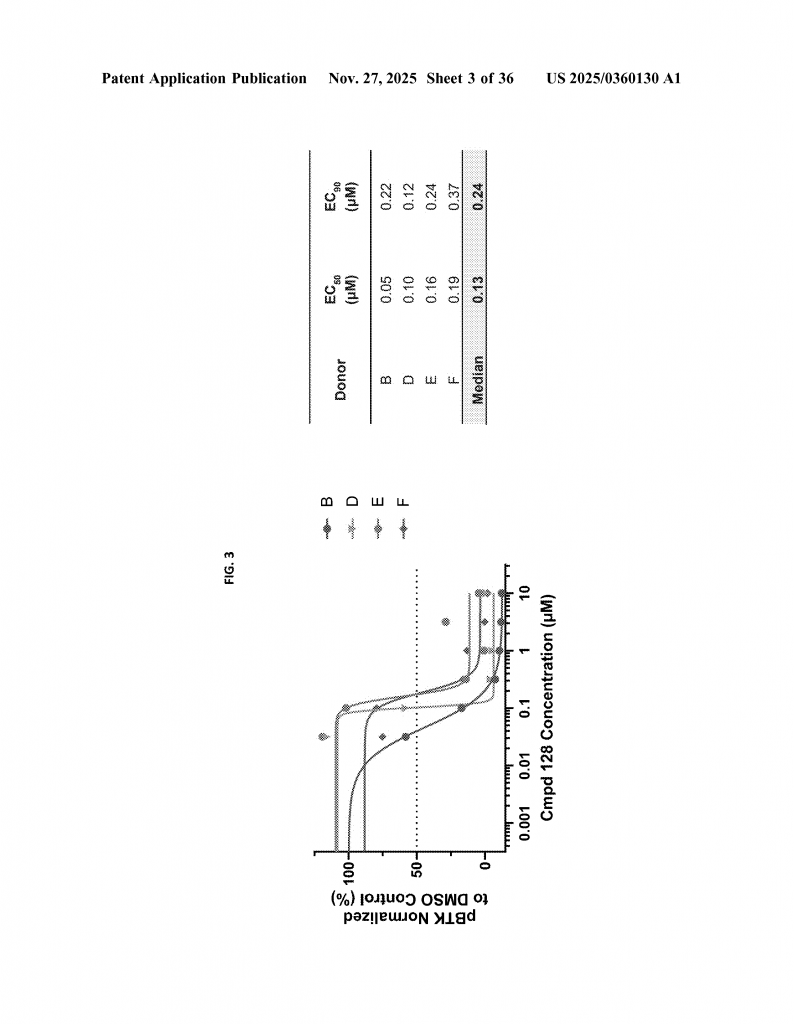
Compound 128 can be given in different doses (like 50 mg, 75 mg, 100 mg, 150 mg, and up to 300 mg, twice a day), so doctors can choose the right strength for each person. The medicine is strong enough to block BTK at very low concentrations (IC50 less than 5 nM), which means you don’t need a huge dose to see an effect.
One of the biggest advances is that it can lower many of the chemicals from mast cells and basophils at the same time: histamine, tryptase, leukotrienes, prostaglandins, kinins, serotonin, heparin, and serine proteases. By turning off the BTK switch, the medicine also stops the chain reaction that leads to inflammation all over the body.
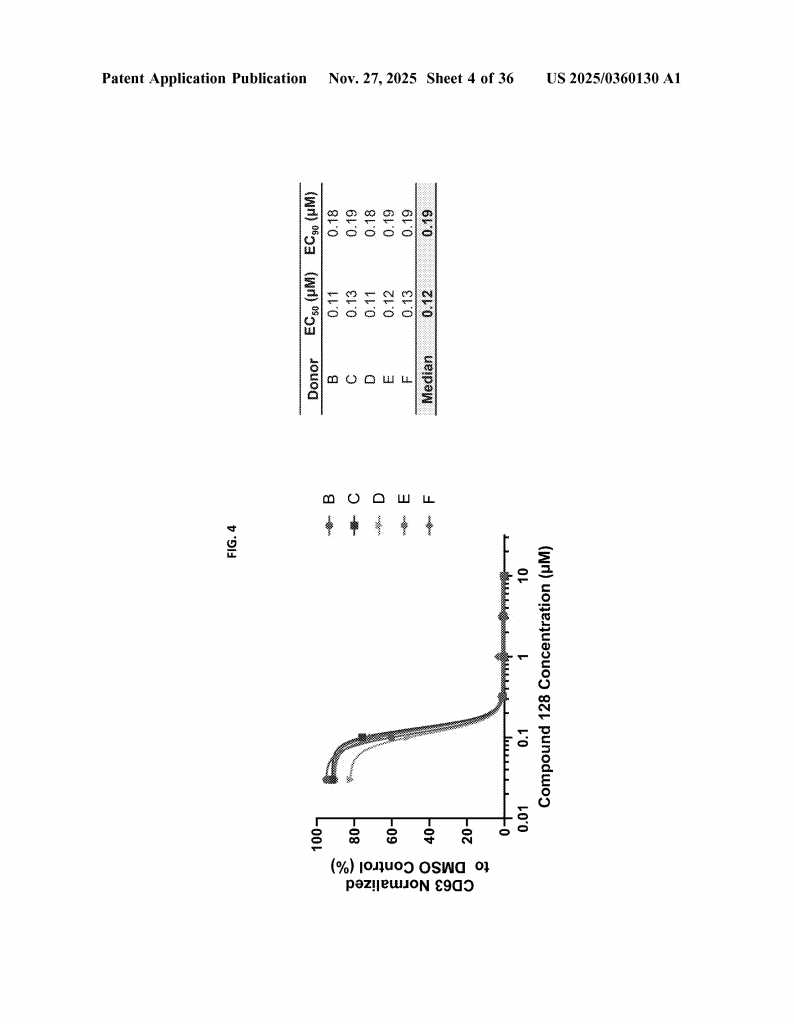
Testing shows that Compound 128 can lower the number of activated basophils by more than 90% (measured by a marker called CD63). It reduces calcium signaling in mast cells, which is a key step before they degranulate. It also cuts the levels of tryptase in the blood, which is a sign that mast cells are calming down. In studies, people with ISM who took Compound 128 had their overall symptom scores drop by over half—much better than with previous medicines like avapritinib.
The medicine works for a wide range of symptoms: tiredness, stomach pain, diarrhea, nausea, skin spots, itching, flushing, brain fog, headaches, dizziness, bone pain, muscle pain, trouble thinking, runny nose, nasal congestion, wheezing, shortness of breath, throat itching, and heart palpitations. It even helps lower the chance and severity of allergic reactions like anaphylaxis.
Compound 128 is also special because it seems safer than old drugs. It does not cause the serious side effects seen with other BTK blockers, like heart rhythm problems, bleeding, or fluid around the lungs. It is not mutagenic (does not damage DNA) or genotoxic (does not harm the genes), and it doesn’t make people more sensitive to sunlight or cause strange side effects like changes in hair color. In studies so far, people have tolerated it well, even when taken for many weeks.
Doctors can measure how well Compound 128 is working by checking the patient’s symptom score (using simple forms that rate symptoms from 0 to 10), and by checking blood tests for tryptase and basophil activation. If the scores and lab tests go down, the medicine is doing its job.
The patent also covers lots of details to make sure the medicine can be made safely as a pill or liquid, with the right strength for each person. It describes how to give it alone or with best supportive care (like antihistamines), and how to use it in special groups—patients with or without the KIT mutation, those who failed other drugs, and those who are treatment naïve.
The key innovations here are:
- Targeting BTK directly to stop mast cell and basophil activation before symptoms start
- Blocking many chemical messengers at once, not just histamine
- Helping a wide range of symptoms, not just one or two
- Working in people with or without the main KIT mutation
- Being safer and more tolerable for long-term use, with fewer side effects
- Giving doctors clear ways to measure if the medicine is helping
This could mean a real breakthrough for people with ISM, finally giving them a medicine that is both effective and safe enough to use every day.
Conclusion
Living with indolent systemic mastocytosis can be overwhelming, exhausting, and frustrating. Old treatments only help a little, and new ones have been too harsh or too weak for most people. This new BTK inhibitor, Compound 128, offers something different—it calms the overactive mast cells and basophils before they can cause trouble, blocks many of the chemicals that make people feel sick, and does it all in a way that the body can handle.
With Compound 128, people with ISM could see big improvements: fewer flares, milder symptoms, and the freedom to get back to their lives. The science behind it is strong, the safety so far looks good, and the results in early studies are exciting. For the first time, there’s real hope that the daily burden of ISM can be lifted. For patients, families, and doctors, this could be a game-changer.
Click here https://ppubs.uspto.gov/pubwebapp/ and search 20250360130.