Invented by DOO; Sungwook, LEE; Soonrewl, KIM; Young-Ki, CHOI; Aram, KIM; Sangmi, KANG; Gwiwoon, SAMSUNG SDI CO., LTD.
If you have a phone, a laptop, or an electric car, you use rechargeable lithium batteries. Today, let’s break down a new patent for a positive electrode in these batteries. We’ll look at why this invention matters, the science behind it, and what’s actually new about it. By the end, you’ll know how this patent changes things and why it could shape the future of devices you use every day.
Background and Market Context
We all want our phones to last longer, our cars to drive farther, and our tools to run without constant charging. That’s why there’s a race to make better batteries—ones with more energy, longer life, and better performance in the cold or heat.
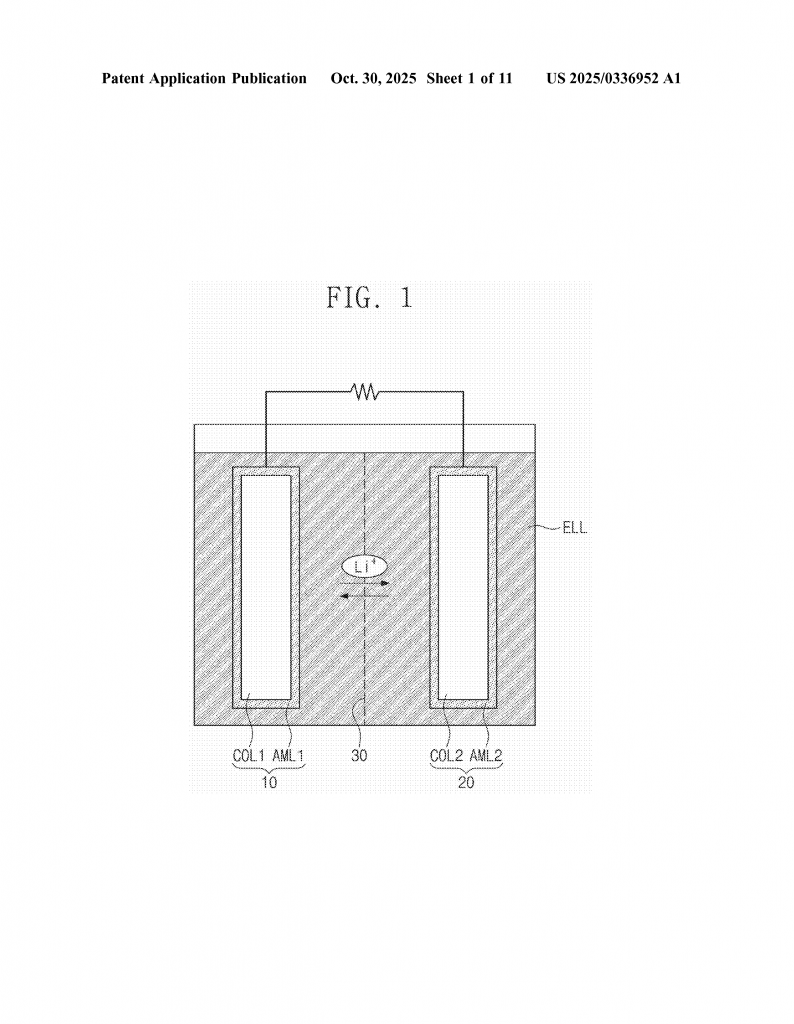
Today, most rechargeable lithium batteries have two main parts inside: a positive electrode (cathode) and a negative electrode (anode). The positive electrode is where lithium ions go in and out during charging and use. The materials we use for this part matter a lot. They decide how much power your battery can store, how many times you can charge it, and if it works well in winter or summer.
In recent years, the battery industry has seen big changes. Electric cars are everywhere. Power tools and home energy storage need batteries that last, charge fast, and are safe. But there’s a problem. Most regular battery materials can’t give us all three things at once: high energy, long life, and good low-temperature performance. If you make a battery with lots of energy, it might not last as long. If you make it for long life, it might not work well in the cold. So, companies and scientists are always searching for ways to mix and match new materials for the best result.
This is where the new patent comes in. It’s not just a small tweak. It’s a fresh way of putting together the positive electrode. It uses a special double-layer structure and three types of particles, each with a different job. This could mean batteries that last longer, work better in cold weather, and store more power—all in one.
Imagine a battery in an electric car that keeps going strong for many years, even in winter, and charges quickly. Or a phone that doesn’t lose its charge when you leave it in your car overnight. That’s the promise behind this new invention. As battery demand keeps rising, ideas like this are crucial—not just for gadgets, but also for the electric cars and renewable energy systems that will shape our future.
Scientific Rationale and Prior Art
To understand why this new electrode matters, let’s look at what scientists have used before and why those choices have limits.
In most lithium batteries, the positive electrode is made from materials like layered oxides (such as NMC or NCA) or olivine-based materials (like lithium iron phosphate, or LFP). Each has strengths and weaknesses:
Layered oxides (like NMC): These give high energy, meaning your phone or car can run longer on a single charge. But they can be expensive and may not last as long after many charges. Sometimes, they do not work as well in cold conditions.
Olivine-based materials (like LFP): These are stable and safe. They last a long time and handle lots of charging cycles. But they don’t store as much energy per weight, so your battery might be bigger or heavier for the same amount of power.
Older patents and products often mixed these materials together in a single layer. Sometimes, companies would add coatings to the particles to help them last longer or work better in cold weather. They might add carbon to help electricity move through the battery or use binders to hold everything together.
But until now, most electrodes were simple “single-layer” cakes. All the active materials were mixed together in one layer on the metal collector. Even if you used more than one type of particle, they were just jumbled up together. This approach worked, but it made it hard to get all the best features at once. If you added more of the high-energy material, the battery might not last as long. If you added more of the long-life material, you lost energy.
Some researchers tried to make “graded” or “layered” electrodes—putting one type of material closer to the collector and another type closer to the surface. But these older attempts often used only two types of particles. They didn’t fine-tune the size, shape, or coatings of each particle. And they rarely used a three-particle system like in this new patent.
Another challenge was particle size and structure. Big particles can store more energy, but small particles help with fast charging and low-temperature use. Mixing sizes helps, but it’s tricky. If you use only big particles, you get high energy but slower charging. If you use only small particles, you lose energy density but gain speed.
Finally, past inventions struggled with keeping the layers together and making sure lithium ions could flow easily between them. If the layers weren’t stuck down well, the battery could swell or break apart over time. If the layers were too thick or dense, ions couldn’t move, and the battery lost power.
This new patent solves these problems in a smart way. By carefully picking three types of particles—each with a different job—and stacking them in two fine-tuned layers, it aims to get the best of all worlds: high energy, long life, and good cold-weather use.
Invention Description and Key Innovations
This invention is about a new way to build the positive electrode in a rechargeable lithium battery. Let’s break it down in simple terms.
The Double-Layer Structure
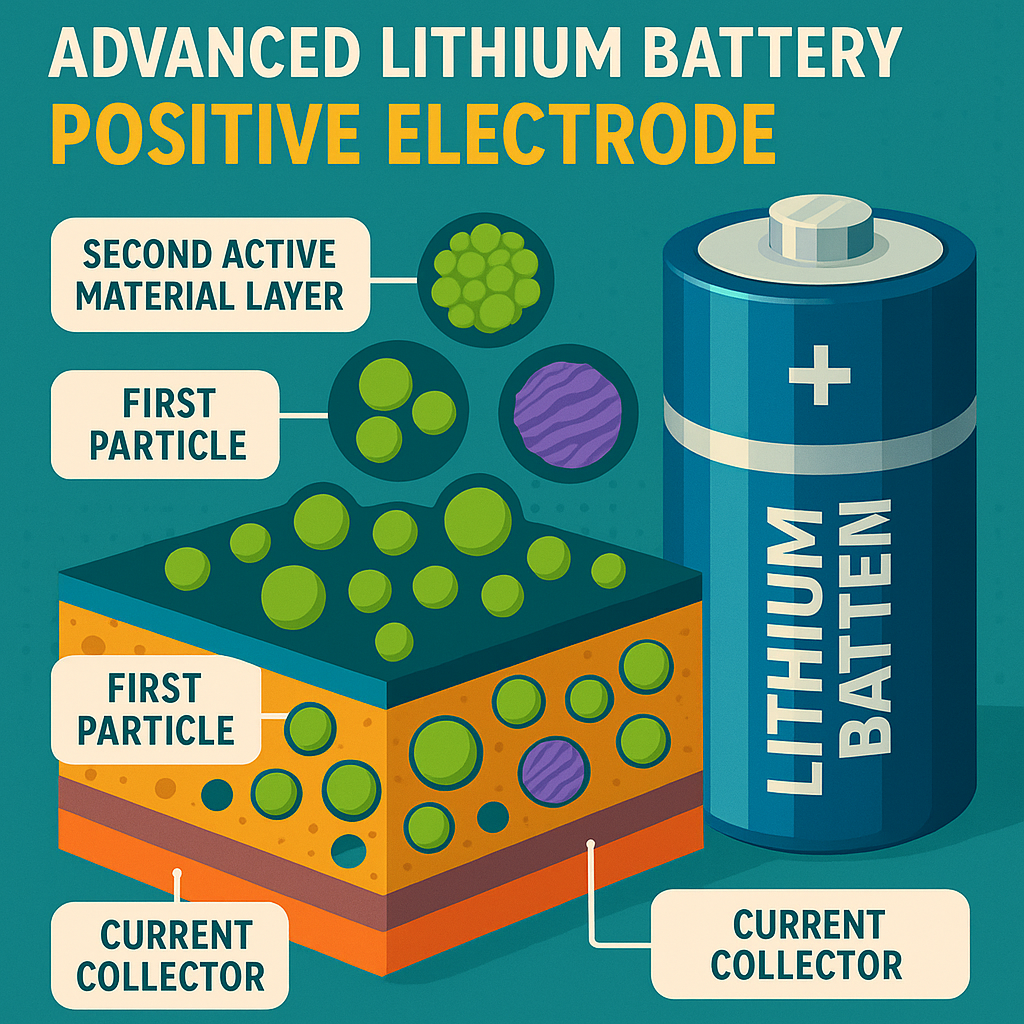
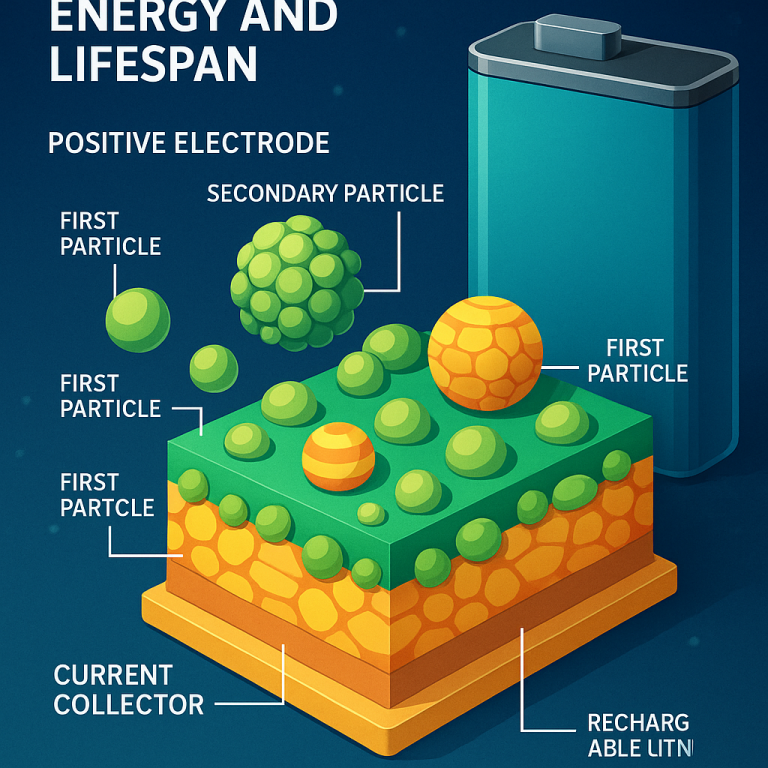
Instead of mixing all the active materials in one big layer, this patent uses two layers, each with a special mix of particles:
- First active material layer (bottom layer, next to the collector): This has two types of particles—a single-particle olivine material (for stability and long life) and a high-nickel layered particle (for high energy).
- Second active material layer (top layer, closer to the battery surface): This has the same single-particle olivine, plus a secondary-particle olivine material. The secondary particles are made up of many tiny grains stuck together, giving them a special structure.
Why does this matter? The bottom layer gives the battery high energy and good structural strength. The top layer boosts performance at low temperatures and during many charge cycles. By stacking these two layers, you get a battery that lasts, works well in the cold, and stores lots of power.
The Three Types of Particles
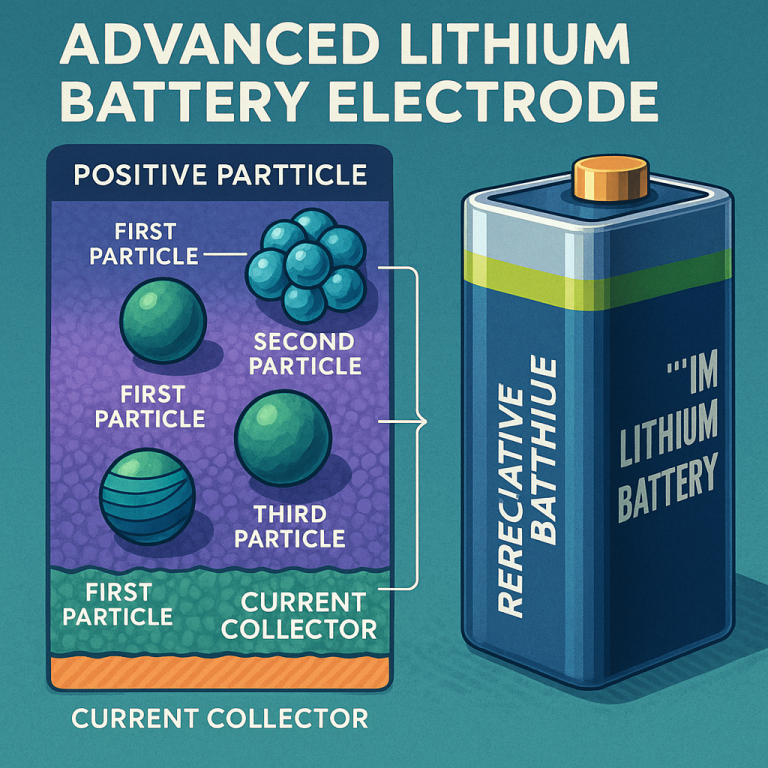
This battery uses three special particles:
- First particle: This is a single olivine-based particle, often a single crystal. It’s small (0.5–2.5 microns wide) and coated with carbon. Its job is to provide a stable structure and help the battery last many cycles.
- Second particle: This is a “secondary particle” made of many tiny (50–150 nm) grains stuck together. It’s bigger (3–7 microns), has a special inside coating (even between the grains), and is also coated with carbon. It helps the battery work well in cold weather and improves the flow of lithium ions.
- Third particle: This is a layered, high-nickel material. It’s bigger (2–10 microns) and coated with boron or aluminum for extra protection. It gives the battery high energy—so your phone, car, or tool can run longer on one charge.
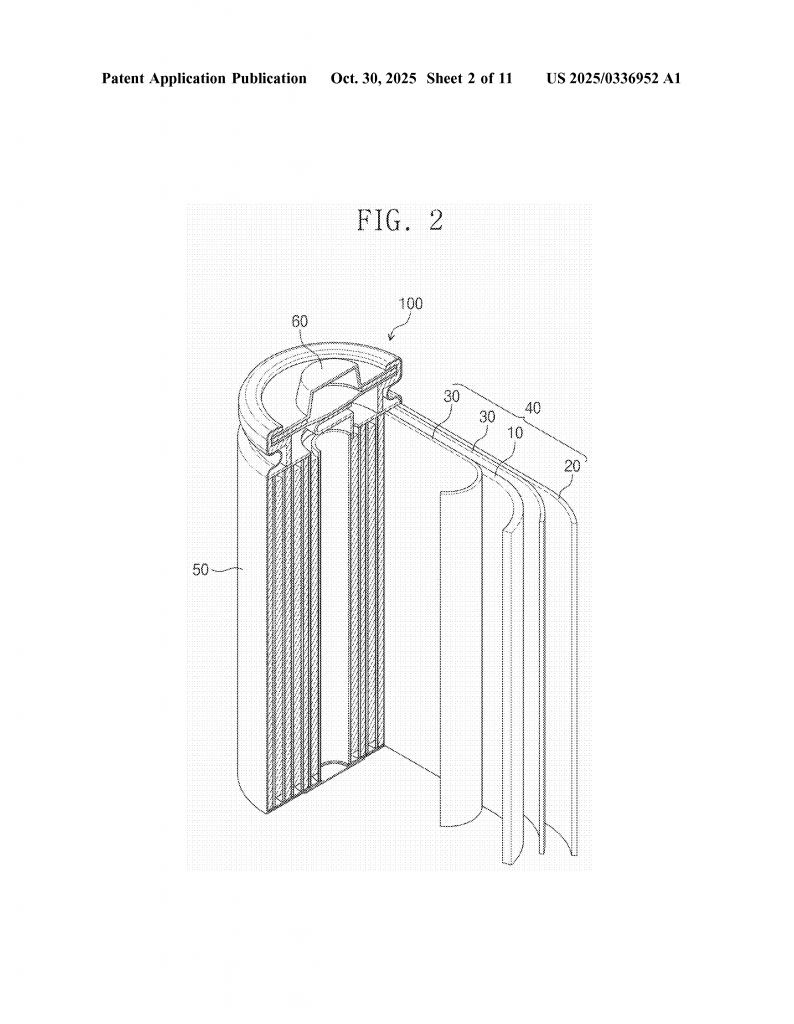
Each particle is carefully chosen, shaped, and coated to do a specific job. The mix and placement in the layers are crucial. Too much or too little of any one particle, and you lose the balance of energy, life, and cold-weather ability.
Fine-Tuned Composition and Structure
The patent doesn’t just throw these particles together. It sets exact ranges for how much of each to use:
- In the first layer, 30–60% of the mix is the third (high-nickel) particle. The rest is single-particle olivine. This layer is about as thick as the second layer.
- In the second layer, 10–40% is the secondary olivine particle, with the rest being single-particle olivine. This layer sits on top, where the battery does the most “work.”
The patent also tunes the size of each particle, the amount of carbon coating, and the “porosity” (how many tiny holes are inside). All this helps lithium ions move quickly and smoothly, even at low temperatures and high charging rates.
Special Coatings and Additives
Each particle can have a special coating:
- First and second particles: Carbon and metal compounds (like titanium, magnesium, or vanadium) to boost conductivity and stability.
- Second particle: Extra grain-boundary coating inside, so even the tiniest grains are protected. This is rare and helps with long cycle life.
- Third particle: Boron or aluminum coatings, which prevent breakdown in high-energy use and help the battery last longer.
The layers also include binders (to hold everything together) and conductive materials (to make sure electricity flows easily). Even these are tweaked in amount and type for each layer, so the battery stays strong but doesn’t get too heavy or thick.
Why This Is Different
This double-layer, three-particle design is new. Older batteries might use two types of materials in one layer, or maybe have a simple two-layer structure. But this design uses three carefully crafted particles, each with its own structure and coating, in two stacked layers. This lets the battery get all the best traits at once:
- High energy: Thanks to the high-nickel layered particles.
- Long lifetime: Thanks to the stable, single-particle olivine and special coatings.
- Good low-temperature performance: Thanks to the secondary olivine particles with grain-boundary coatings.
The patent also shows, with real tests, that batteries made this way keep more than 90% of their capacity after 50 charge cycles, even at high energy. They also keep working well at -20°C, which is rare for high-energy batteries. This means your device or car could keep going strong, year after year, even in tough conditions.
Conclusion
This new patent for a double-layer positive electrode in lithium batteries is a big step forward. By using three types of particles, each with a special job and coating, and stacking them in two layers, the inventors have found a way to make batteries that are powerful, long-lasting, and reliable even in the cold. They’ve solved problems that have challenged the battery world for years—getting all the best features in one package, without big trade-offs.
For anyone making or using batteries, this invention is both practical and exciting. It could lead to phones that last longer, cars that run farther, and energy systems that work better in all climates. The ideas here—careful particle choice, smart layering, and fine-tuned coatings—could set the standard for the next generation of lithium batteries. Whether you’re a battery engineer, a tech company, or just someone who wants better devices, this patent shows that with the right science, we can get more from every charge.
Click here https://ppubs.uspto.gov/pubwebapp/ and search 20250336952.