Invented by LEE; Jeawoan
Secondary batteries are everywhere in our daily lives, from the phones we use to the cars we drive. As technology grows, so does the need for safer, more powerful, and longer-lasting batteries. A new patent application reveals clever ideas in battery design, making batteries more efficient and easier to manufacture. Let’s dig deep into this patent to see how it changes the game for secondary batteries.
Background and Market Context
Today, batteries are at the heart of almost every gadget and tool we use. They power our phones, laptops, cameras, and even electric cars. These batteries, called secondary or rechargeable batteries, can be used over and over. People want batteries that last longer, charge faster, and are safe to use. This demand is not just from those who use small electronics like phones and tablets, but also from big industries, such as car makers and power companies.
Companies are always looking for ways to make batteries better. When we talk about making a battery better, it means making it store more energy in the same space, charge up faster, and work safely even after many uses. This is a big challenge because there are limits to how much you can change a battery’s size and how much energy you can put inside it.
One big problem in battery design is how to connect the parts inside the battery (the electrodes) to the outside world without taking up too much space or making the battery less safe. The more space taken up by the parts that connect the battery to the device, the less space there is for the stuff that stores energy. If you use too many extra parts, the battery gets heavier and can’t hold as much energy. If you try to skip parts, you might have safety problems, like the battery getting too hot or even catching fire.
Another issue is making batteries quickly and cheaply. When a battery is hard to put together, it costs more to make. This makes the final product, like a phone or a car, cost more. So, battery makers are always searching for ways to make batteries that are easy to build in factories and easy to use in products.
The patent application we are looking at tackles these very problems. It shows new ways to connect the important parts inside a battery, making the battery safer, smaller, and easier to put together. This is important for everyone: phone users, car drivers, and even the people who run big power plants. If batteries are better, everyone wins. The market for batteries is growing fast, and with new inventions like this, even more devices and machines can use rechargeable batteries in the future.
Scientific Rationale and Prior Art
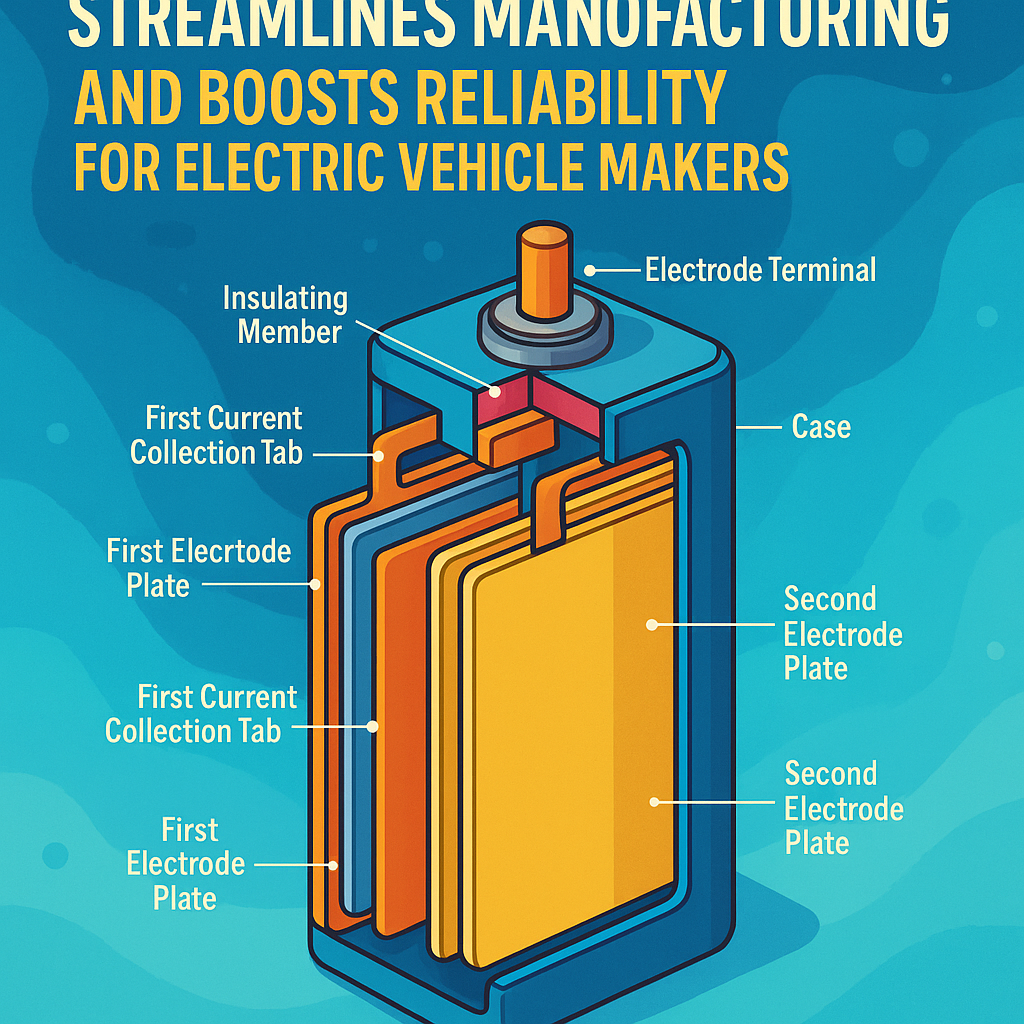
To understand why this patent matters, let’s look at how batteries have worked up until now. A typical secondary battery has a few main parts: two plates (called electrodes), a separator (to keep them from touching each other), and a liquid or gel (the electrolyte) that lets electric charges move between the plates. The plates are inside a case, and there are tabs (flat pieces of metal) that connect these plates to the outside world. These tabs usually stick out through the top or side of the battery, letting you connect the battery to a device.
In most older battery designs, the tabs from the plates are connected to other metal strips or wires before they reach the battery’s terminals (the points where you connect your charger or device). These extra strips are there to make it easier to weld or connect everything together, but they take up space inside the battery. That space could be used for more of the active material that stores energy. Using more space for connectors means less space for energy storage, so the battery can’t last as long or be as powerful.
Some earlier inventions tried to solve this by making tabs from all the plates and joining them together into a single “current collection tab.” This helps, but you still need to connect this big tab to the terminal or to the case, often using an extra strip or another part. Again, more parts mean more space taken up by things that don’t store energy.
Another problem is safety. If the tabs or connectors touch the wrong part of the case, or if they move during assembly, you can get a short circuit. That means the battery could heat up, stop working, or even explode. To stop this, many designs use plastic or rubber insulators between the tabs, the case, and the terminals. But making sure all these insulators line up perfectly every time takes a lot of work and can slow down manufacturing.
Lastly, making sure the battery is easy to fill with electrolyte (the liquid that lets the battery work) is important. If the connectors or insulators block the way, it can be hard to fill the battery completely. Any air or gaps can cause problems with how well the battery works or how long it lasts.
There have been many patents and designs that try to solve these problems in different ways. Some use special shapes for the tabs or the insulators. Some use new welding techniques. Others try to make the case in a way that gives more room for the plates and less for the connectors. But most still end up with some extra parts inside the battery, or they make the assembly process harder.
The new patent we are looking at brings together several clever ideas to solve these problems. It finds a way to connect the tabs from the plates directly to the case or terminal, without any extra strips. It uses a special insulator with holes in just the right places, so assembly is easier and safer. It even thinks about how to make filling the battery with electrolyte smoother. All these improvements help make a battery that is safer, easier to build, and can store more energy in the same space.
Invention Description and Key Innovations
This new patent describes a very smart way to build a secondary battery. Let’s break down the main parts and the clever tricks used to make this battery better.
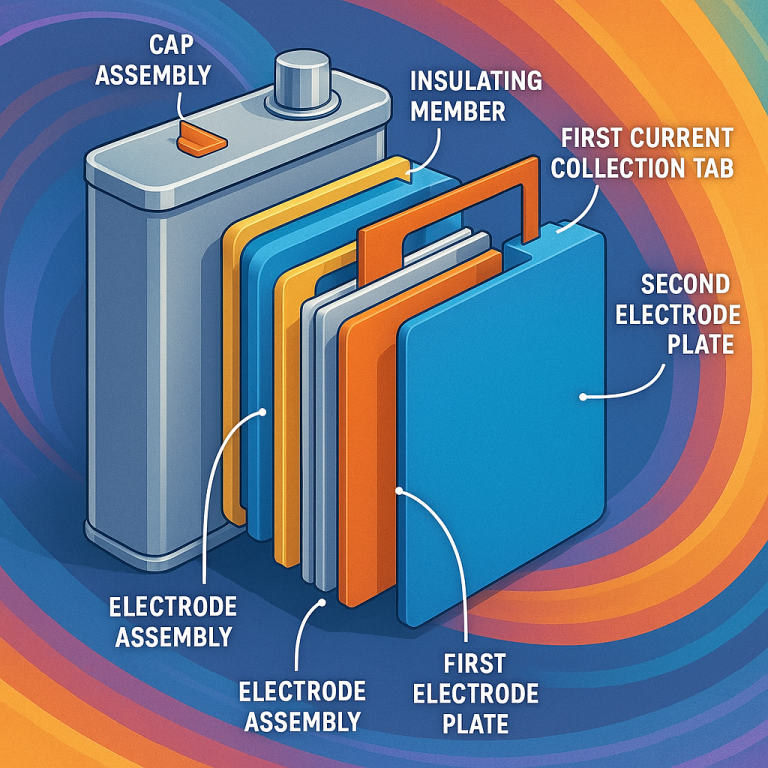
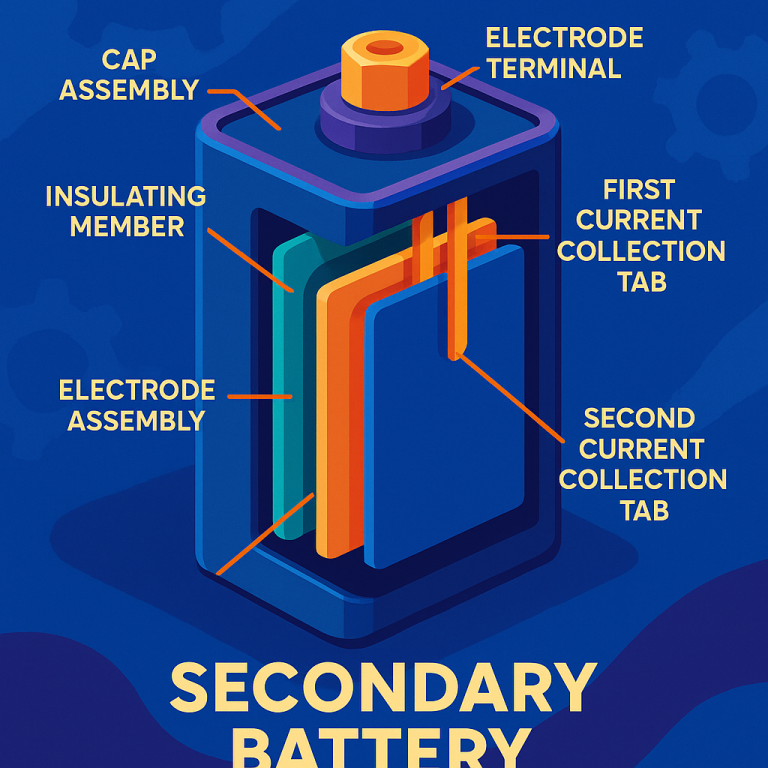
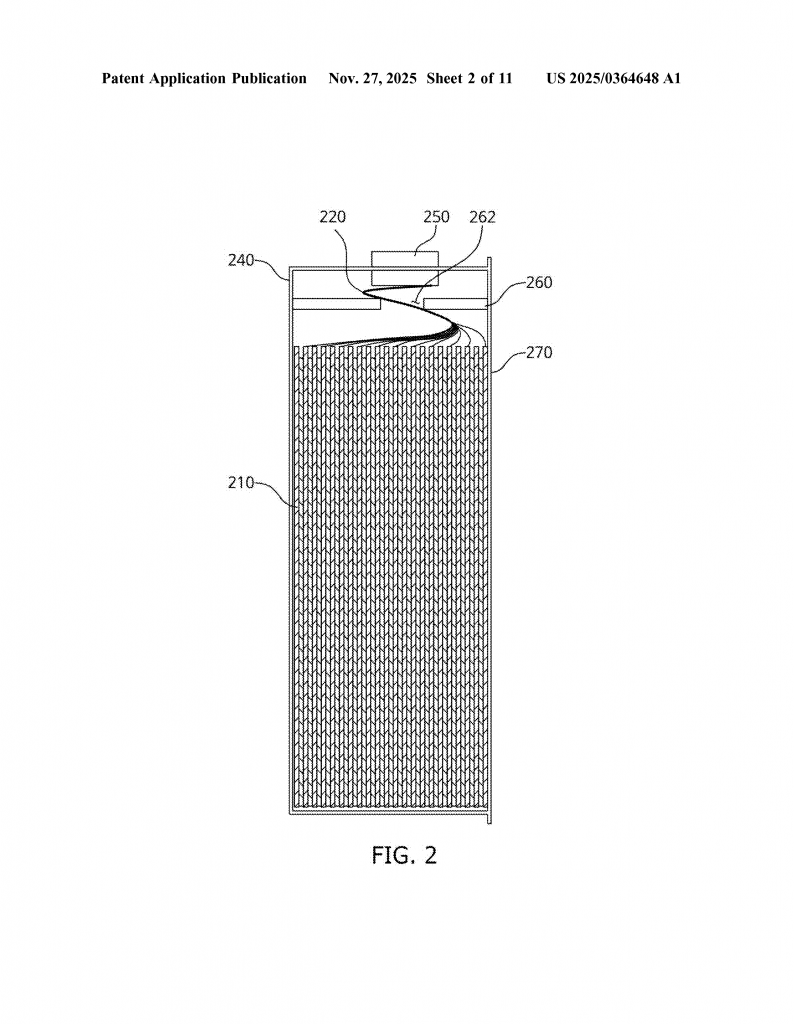
First, the battery has two main plates, called electrodes. One is the positive side, and the other is the negative side. On each plate, there are little tabs that stick out—a first current collection tab on the first plate and a second current collection tab on the second plate. These tabs are joined together from many smaller tabs (base tabs) that come from each layer or sheet in the battery. This big tab is then used to carry the current from all the layers out to the terminal or the case.
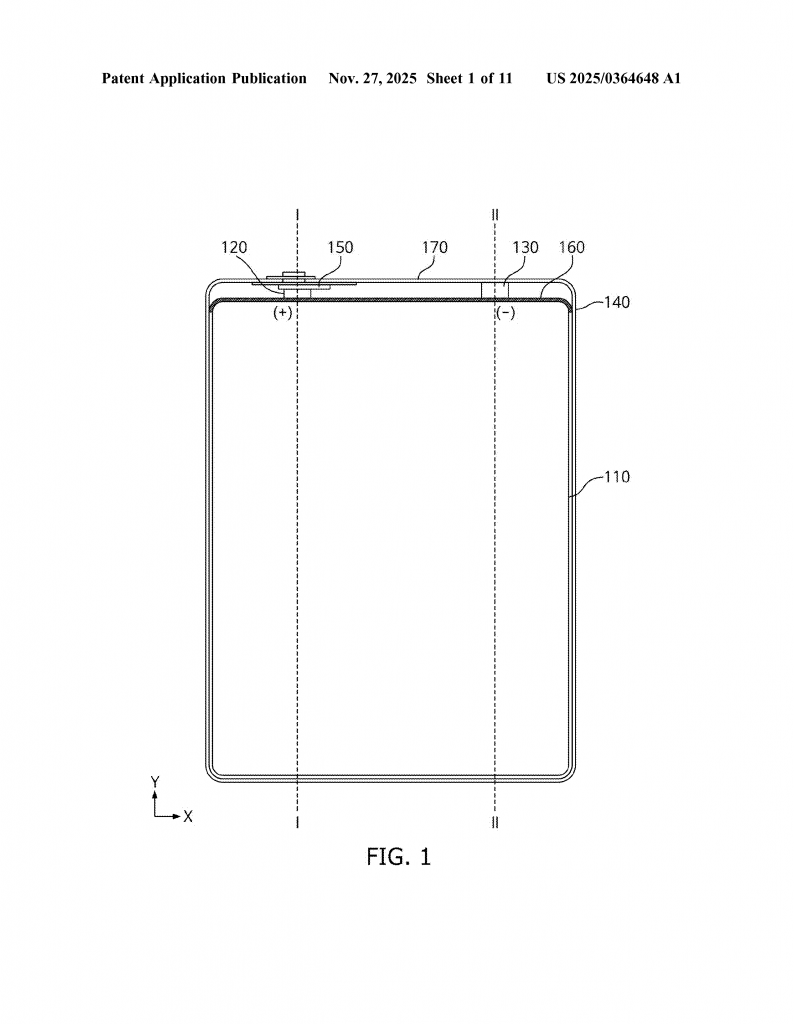
The big idea is that instead of using extra strips or wires, these tabs are connected straight to where they need to go. The first current collection tab (from the positive plate) is connected right to the electrode terminal, which sticks out through the cap of the battery. The second current collection tab (from the negative plate) is connected right to the case of the battery, which acts as the negative terminal. This means no extra strips or connectors are needed inside the battery, leaving more room for the stuff that actually stores energy.
To make sure everything is safe and nothing touches where it shouldn’t, an insulating member (basically a special piece of plastic) is placed between the cap assembly and the electrode assembly. This insulator has special holes in it, called through-holes. The first and second current collection tabs pass through these holes to reach where they need to go. The holes are placed side by side, spaced apart so the tabs don’t touch each other. They are also set off to one side, giving extra room for welding the tabs to the terminal or case, which makes assembly easier and safer.
One neat feature is that this insulator can also have a sticky (adhesive) layer, so it can be bonded right to the electrode assembly. This stops it from moving around during assembly and makes the process quicker and more reliable.
The insulator can also have extra holes for injecting the electrolyte. This is very useful because it means the liquid that makes the battery work can be added easily, without being blocked by other parts.
To make the battery even safer, the design adds a protection tape. This tape covers the area where the tabs come out, so if the tabs bend or move during assembly, they won’t touch the case or the cover and cause a short circuit. The tape is made from tough plastic and can be stuck either to the electrode assembly or to the inside of the case cover. It’s made wide enough to cover both tabs, so there’s no chance of a dangerous connection.
The way the battery is put together is also very clever. The electrode assembly is made by stacking the positive and negative plates with separators in between. The tabs are joined and passed through the holes in the insulator. Then, the first tab is connected to the terminal, and the second tab to the case—usually by welding. The whole assembly is rotated and inserted into the case, bending the tabs as needed. The case is then sealed with a cover, usually by welding. The result is a tight, safe, and space-saving battery.
This design brings several big benefits. By connecting the tabs directly, there’s more room inside for active materials, so the battery can store more energy. The special insulator makes assembly safer and easier, reducing the risk of short circuits. The protection tape adds another layer of safety. And the way the battery is filled with electrolyte is smoother, making the whole process faster and more reliable in the factory.
These changes make the battery not just better for small gadgets, but also for big things like electric cars and power storage. The design is very flexible and can be used for batteries of many shapes and sizes—rectangular, cylindrical, or even pouch-shaped. This means it can help many industries make better, safer, and more powerful batteries for all sorts of uses.
Conclusion
Batteries are a big part of our lives, and making them safer, smaller, and more powerful is important for everyone. This new patent application shows a smart way to do just that. By connecting the important tabs inside the battery directly to where they need to go, and by using special insulators and protection tapes, this design makes batteries that last longer, charge faster, and are safer to use and easier to build. These ideas could soon be found in the phones, cars, and devices we all use every day, making life a little bit better for all of us.
Click here https://ppubs.uspto.gov/pubwebapp/ and search 20250364648.