Invented by TADAHAL; Shivkumar Basavaraj, RAVEENDRANATH KAMATH; Manoj, SOMARAJU; Dasam, JANCE; Jithu, FISCHER; Matthew J., Avago Technologies International Sales Pte. Limited
Wireless networks are everywhere. We use them at home, at work, and almost anywhere we go. With so many devices trying to connect, finding the best access point (AP) quickly and reliably is a big challenge, especially in busy places. A new patent application introduces a smart system that lets both devices and access points adjust how long they wait and listen for each other. This “dynamic dwell time” helps devices connect better, even when things get crowded. In this article, we’ll explore why this is needed, how it’s different from what came before, and what makes the invention special.
Background and Market Context
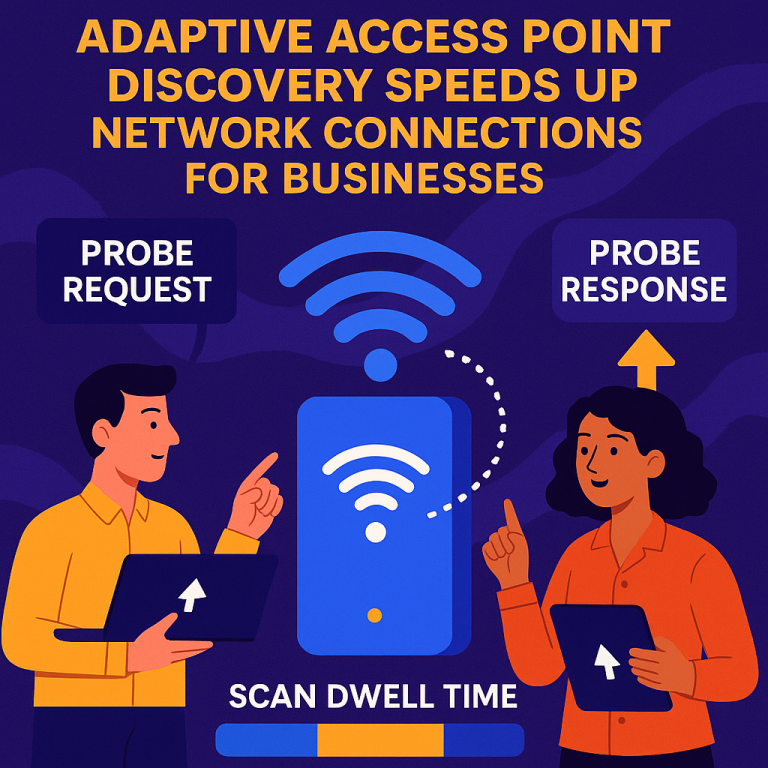
Imagine a busy airport, a large office, or even a packed apartment building. In all these places, there are many wireless networks running side by side. Each device, like a phone or a laptop, needs to find an access point to connect to the internet. To do this, devices usually send out “probe requests” to see what access points are nearby. Each access point that hears the request can send back a “probe response” with details about its network. The device then picks the best one to connect to.
But here’s the problem: there are only so many channels, and many networks might use the same one. When several devices try to talk at once, messages can get delayed or lost. Sometimes, a device waits to hear back from an access point, but the answer never comes because the network is too busy or the access point is handling other tasks. If the device moves on too soon, it might miss out on a good connection. If it waits too long, it wastes time and battery.
The number of wireless devices is growing every year, and people expect things to work fast and without problems. Users do not want dropped video calls, slow downloads, or trouble roaming from one area to another. Businesses and homes are adding more devices and smart products, making the airwaves even busier. Standard wireless protocols like Wi-Fi (IEEE 802.11), Bluetooth, and cellular systems have tried to keep up. They use fixed times for scanning and waiting, but these are not always right for every situation.
As more people rely on wireless networks for both fun and important work, it’s clear that the old way of scanning for access points is not enough. Networks need to be smarter and able to adjust in real time based on how busy the air is, how many networks overlap, and what each device needs at the moment. This is where the new patent comes in, offering a way to make both devices and access points more flexible and responsive.
Scientific Rationale and Prior Art
To understand why this invention matters, let’s break down how devices usually find access points. When a device wants to find a network, it scans channels and waits a set “dwell time” on each one. While listening, it sends out probe requests. If an access point gets the request, it tries to answer before the device moves on. The fixed dwell time was chosen as a compromise: long enough to catch most responses, short enough to avoid wasting time.
This works okay when there isn’t too much traffic, but in real life, networks often get crowded. Multiple networks can overlap, causing interference. Access points might be slow to answer because they are busy helping other devices or because the channel is clogged with data. If the fixed dwell time is too short, a device might leave before the access point has a chance to answer. If it’s too long, the device spends too much time on each channel, slowing down the whole process.
To try to fix this, past solutions added some tricks. Some systems would let devices retry if they didn’t get a response, or access points would use “beacon” frames to broadcast their presence more often. Others added quality of service (QoS) settings to prioritize some types of traffic, like voice or video. Some access points would even share reports about nearby networks so devices could make smarter choices.
Still, these methods didn’t solve the root problem. They didn’t let devices and access points talk about how long they could wait or how busy they were. They couldn’t adjust their behavior in real time based on current conditions. For example, if an access point was busier than usual, it might not be able to respond quickly, but the device scanning for it would have no way to know this. If several access points overlapped, there was no way for a device to know which one could answer faster or which channels were less crowded.
As wireless standards advanced, like with Wi-Fi 6 and the coming Wi-Fi 8 (802.11bn), the ability to handle more devices and more data improved. However, the basic way devices discovered access points didn’t get much smarter. The dwell time was still mostly fixed, and there was no easy way for a device and access point to share real-time information about how long to wait or how urgent a request was.
In summary, the scientific community and industry recognized the need for a better way for devices and access points to communicate during the discovery phase. The field needed a solution that allowed both sides to adjust based on what was happening right now, not just what was expected in the past.
Invention Description and Key Innovations
The new patent brings a fresh approach to the challenge of access point discovery. It lets both the device (called a “station” or STA) and the access point (AP) talk about how long they can wait, how urgent a request is, and how busy the network is at any moment. This is done by adding new fields to the messages they send each other and by using smart rules to adjust their behavior as needed.
Here’s how it works in simple terms:
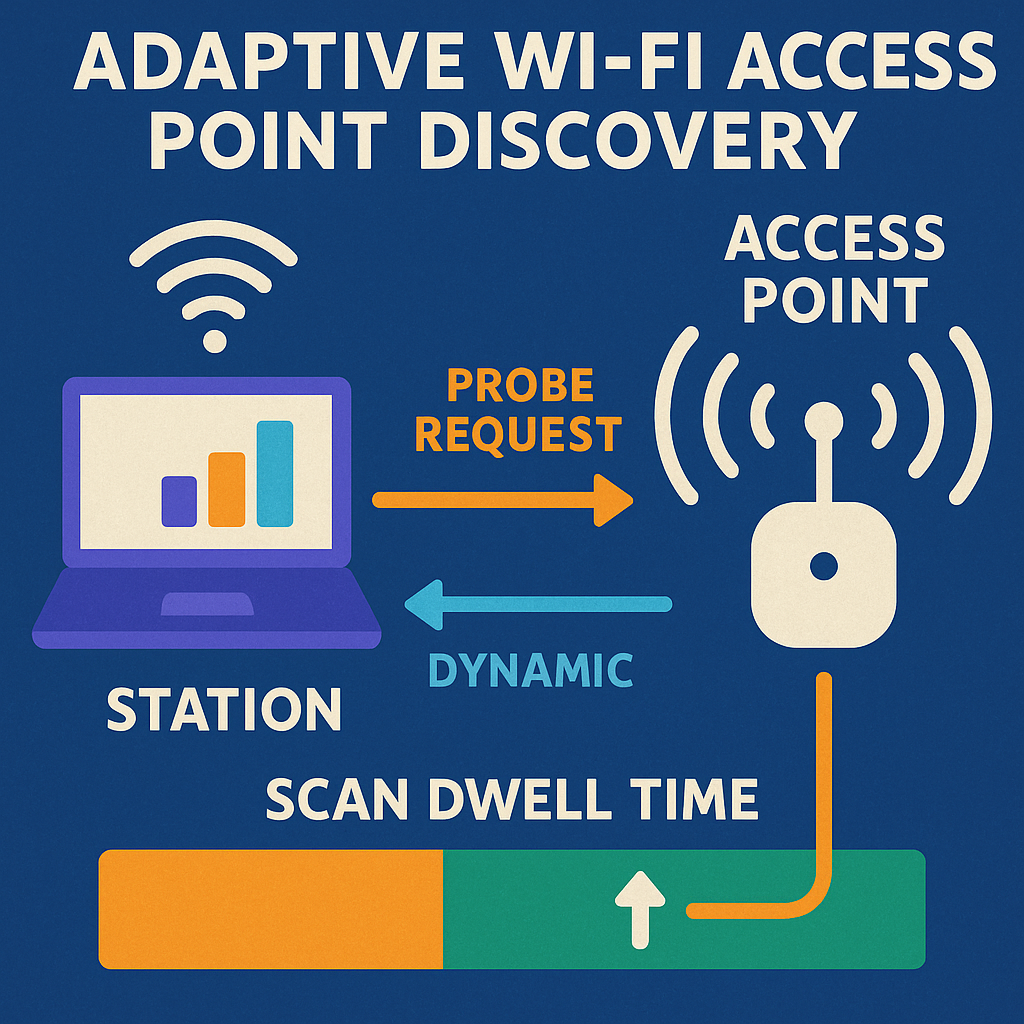
When a device wants to join a network, it creates a special probe request. This message now includes not only the usual info, like the device’s address and the network name it wants, but also two new things: how long it plans to wait for a response (the “scan dwell time”) and a “priority” value. The priority tells the access point if the request is urgent (like when someone is in the middle of a video call and needs to roam), normal, or low (like when the device is just looking for any network).
The device sends this probe request out. If an access point hears the request, it checks the priority and the scan dwell time. If the request is high priority or the dwell time is short, the access point will try to answer quickly, even if it’s busy. If the request is low priority and the access point is too busy, it might wait or even skip responding to avoid wasting time.
The access point’s answer, the probe response, can also include new fields. It can tell the device how long it usually takes to answer requests (the “average response time”), how crowded the channel is, and how much of the channel is being used. If there are several access points in the same area, one can send a “reduced neighbor report” with details about the others, including their average response times and how busy they are.
After the device gets this info, it can adjust its scan dwell time for future requests. If it sees that the channel is busy or that the access point usually takes a while to answer, it can wait longer next time. If the network is clear and responses are fast, it can shorten the dwell time to speed up scanning. This makes the whole process much more flexible and efficient.
The system doesn’t just stop at discovery. It can also adjust dwell times for other steps, like authentication and association, which are needed to fully join a network. If an access point reports that it usually takes longer to handle these requests, the device can wait longer before giving up or trying again.
Another smart trick is that if a device is waiting for a probe response and notices that it hasn’t arrived yet (for example, halfway through the dwell time), it can decide to increase the dwell time on the fly. This helps in cases where there is a sudden burst of traffic or interference. The device can also look for signs of local problems, like energy spikes or overlapping networks, and adjust how long it waits.
The access point can get even smarter by avoiding duplicate work. If it already has a response queued up for a device, it can ignore repeated requests from the same device until the first one is answered. This saves time and keeps the airwaves less crowded.
The invention also makes room for future wireless standards. The fields for dwell time, priority, and metrics can be added as custom or standard fields, so the system can grow as new features are added to Wi-Fi and other protocols.
Here’s what makes this system truly innovative:
– Devices and access points can now talk about and adjust how long they wait for each other, instead of using a fixed guess.
– Both sides can share real-time information about how busy they are, how fast they usually respond, and what kind of traffic is going on.
– Requests can be given priorities, so urgent needs are handled first, making things like roaming during a video call much smoother.
– The system can adapt in real time, both during discovery and during other steps like authentication, so devices don’t waste time or battery.
– It helps reduce unnecessary traffic by letting access points skip duplicate responses and by letting devices adjust how often and how long they scan.
All these improvements come together to make wireless networks work better, especially in busy places. People will see fewer dropped connections, faster roaming, and more reliable service. Network owners will see less congestion and happier users.
Conclusion
Wireless networks are a key part of our daily lives, but as they get busier, old methods of finding and joining networks just aren’t enough. This new patent introduces a flexible, real-time way for devices and access points to work together, making the most of every moment and every channel. By allowing both sides to share information and adjust how long they wait, the system cuts down on delays, saves battery, and keeps connections strong even when things get crowded. As our world moves toward more connected devices and smarter networks, this kind of invention will be a big part of making sure wireless just works.
Click here https://ppubs.uspto.gov/pubwebapp/ and search 20250365567.