Invented by Gupta; Chitrak
Today, we’re unpacking a patent application that introduces the idea of an “enterprise device social media cloud.” This technology lets devices in a company talk, collaborate, and follow company rules—all using a system that looks and feels like a social network. If you want to see how the future of device management might look, keep reading. Let’s make this complex topic simple and easy to follow.
Background and Market Context
In modern companies, there are more devices than ever before. Computers, phones, HVAC systems, servers, and even power managers all play a big part in daily work. Managing these devices can be tough. Each device needs to be set up, watched, fixed when things go wrong, and kept safe. Usually, this work falls on IT teams, who use tools like ticketing systems, remote management software, and network controls. Even with all these tools, things can get messy. Devices come from different makers, have different needs, and often don’t “talk” to each other in a smart way.
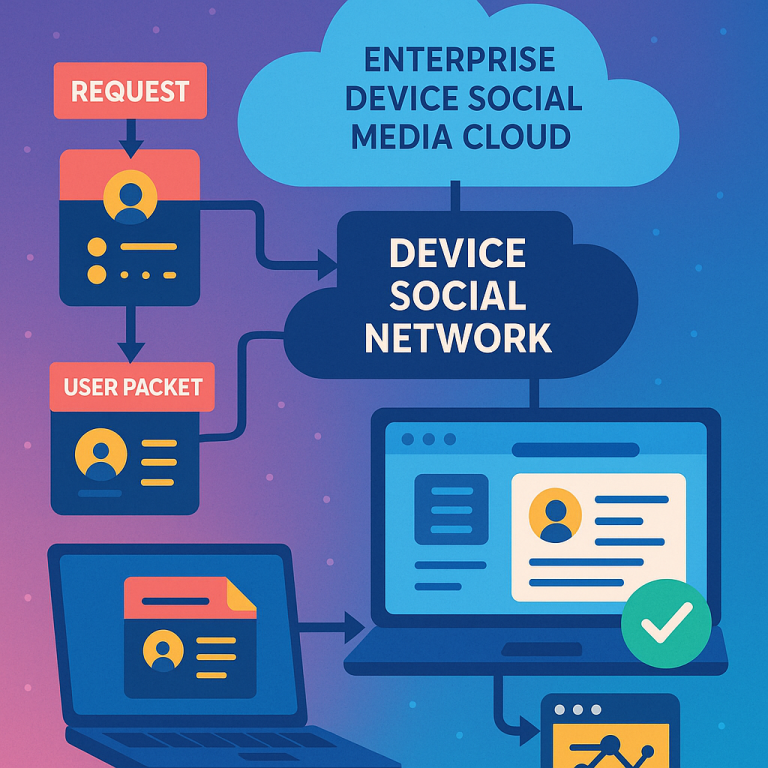
This is where the idea of a “device social network” comes in. Imagine every device in your office had its own “handle,” like @Bob-Laptop or @Main-Server, and could send messages about its status, problems, or updates. If a device has trouble, it can post a message that other devices (and the IT team) can see. If another device has had a similar problem before, it can share a fix. This is a big change from today’s world, where most device support is one-on-one and slow.
Companies also have strong rules about who can do what. These rules are managed by directory services like Microsoft’s Active Directory. Right now, people (not devices) are the main users of these services. Devices often have simple roles and can’t take full part in the company’s user groups, policies, or notifications. This limits smart automation and makes it harder to keep everything safe and up to date.
With more devices joining company networks every year, the need for better management is growing. Companies want tools that let devices be smarter, share more, and follow company rules, all without creating new risks. Cloud computing and on-premises (in-house) solutions both play a role here, but many companies want control over their own data and systems. This leads to demand for private, secure solutions that work inside the company, not just on the public internet.
The patent application we’re examining proposes a new way to handle all this: a private device social network, powered by the company’s own cloud, tightly connected to the company’s directory services. This system promises to make device management more social, smart, and secure.
Scientific Rationale and Prior Art
To see why this patent matters, let’s look at what came before it and why change is needed.
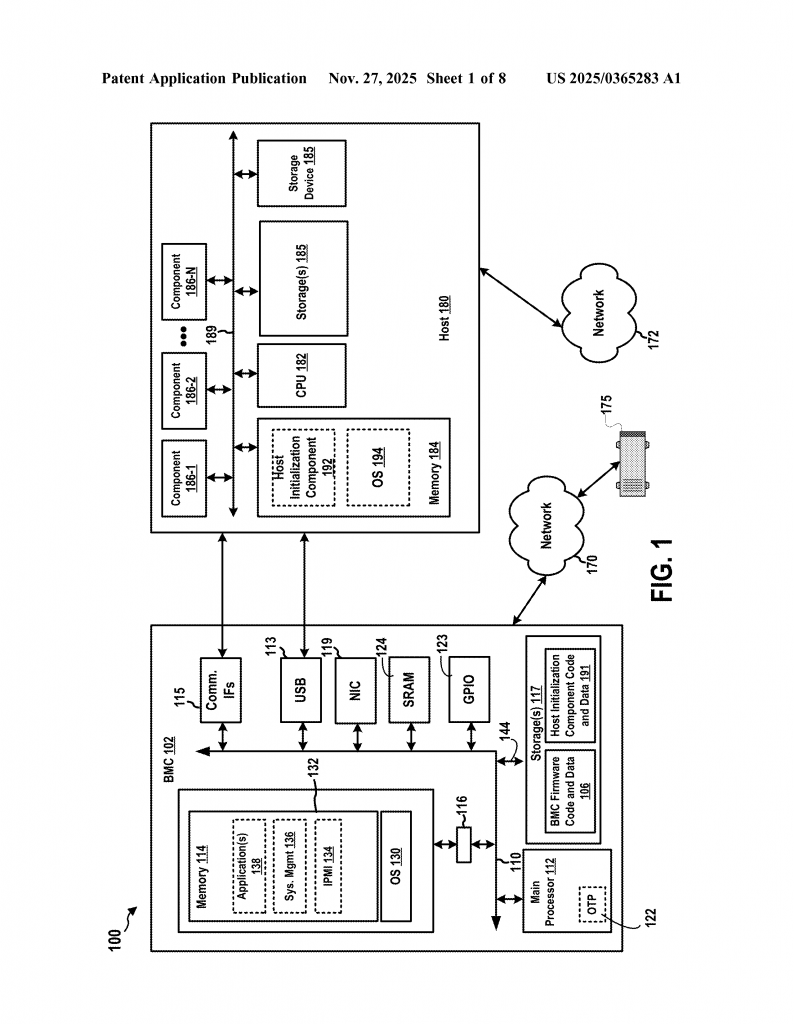
For years, the main way to manage devices in a company has been through “server management” standards. One well-known standard is the Intelligent Platform Management Interface (IPMI). This lets special chips called Baseboard Management Controllers (BMCs) watch over servers, check health, collect logs, and even restart servers when needed. These tools are good for fixing hardware problems but don’t help much with collaboration or sharing information between many types of devices.
Directory services, like Active Directory or LDAP servers, have been used to manage users and groups for a long time. These services keep track of who can access what, and what each user is allowed to do. But in most cases, devices are not treated as “users.” They are special cases, managed separately, and do not join groups or have the same types of privileges as human users. This makes it hard for devices to share information or be managed in a flexible way.
Some tools let devices send alerts or tickets to IT teams, often using email or ticketing systems. Others let devices report problems to the cloud, where a vendor might help fix them. But these systems are not “social.” Devices don’t have their own identities, can’t join groups, and can’t share knowledge directly with other devices.
There are also security challenges. When devices are managed outside of directory services, it’s hard to apply company rules or stop bad actors from joining the network. Rogue devices might try to pretend to be real company machines, but because there’s no strong tie to the directory service, stopping them is hard.
What’s missing in all of these older systems is a way for devices to become first-class citizens in the company’s network. Devices need unique IDs, a way to join groups, follow company rules, and share information with each other and with IT—all while keeping everything safe and under company control. This is what the new patent aims to do.
Invention Description and Key Innovations
Now let’s take a close look at what the patent actually covers, and why it’s different from what came before.
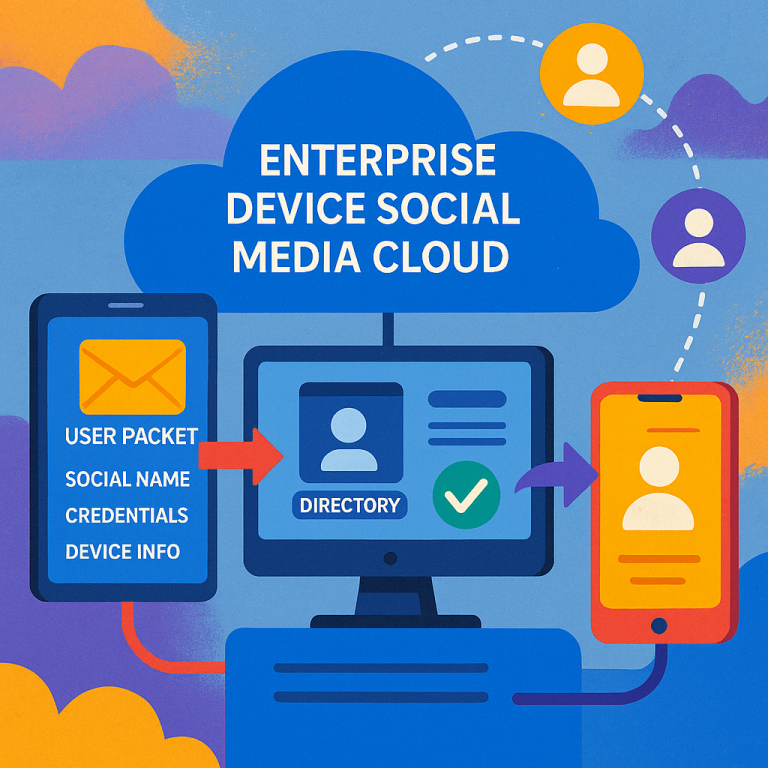
At its heart, the invention is a method and system that lets company devices register themselves as “users” in a private social network, which runs on the company’s own cloud. Each device gets a unique handle—just like a social media username. When a device wants to join this network, it sends a “user packet” to the cloud. This packet includes:
- A network social name (its handle, like @HVAC or @Bob-Laptop)
- Enterprise credentials (proof it belongs to the company, such as a username and password or certificate)
- Device information metadata (details about the device, like serial number, type, brand, and model)
The cloud checks this packet. If everything is correct, it calls the company’s directory service (like Active Directory) to create a new user entry for the device. Now, the device is a real user in the directory service, with its own handle and policies.
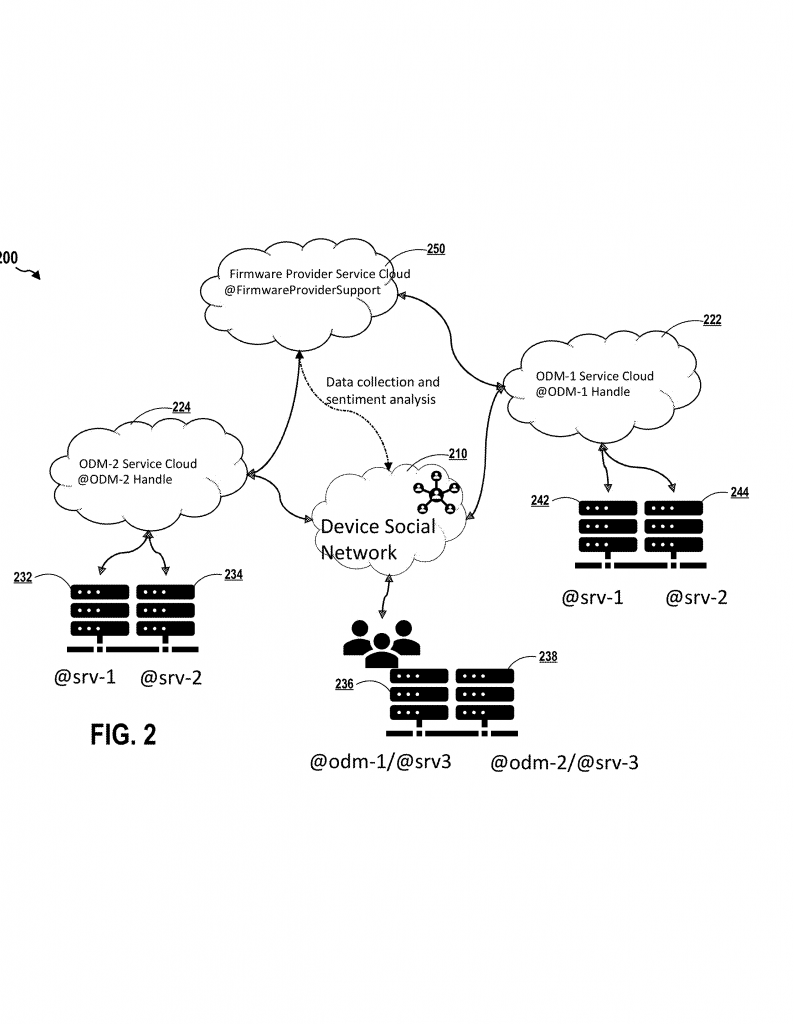
After this, the cloud creates a device social network user for the device. This user can then join groups in the social network (such as “IT Devices” or “Building Systems”), share messages, receive notifications, and follow company policies. The system checks permissions with the directory service for every request. If a device tries to do something it’s not allowed to, the action is blocked.
Key features of this system include:
- Mapping of privileges: The system takes privileges from the directory service (like “admin,” “read-only,” or “guest”) and maps them to social network privileges (like “can post,” “can only view,” or “no access”).
- Group management: Devices join groups in the social network only if the directory service says they can. This keeps everything safe and follows company rules.
- Notifications: The cloud can send public notifications (to everyone in a group) or localized notifications (just to certain devices), based on group membership and policies.
- Caching: To keep things fast, the system can cache privilege information so it doesn’t have to check with the directory service every time a device acts.
- Human-friendly integration: While most of the system is for devices, humans (like IT admins) can also be part of the network, manage groups, and handle tough cases when needed.
This invention is not just for servers. It works for all kinds of devices—laptops, tablets, phones, HVAC systems, and more. Any device that needs to be managed can join the network, get a handle, and become part of the company’s social fabric.
The cloud itself can run on-premises (inside the company) or, if needed, in a private cloud. It never has to use the public internet, keeping everything secure and under company control.
Let’s look at a simple example to show how this works in practice:
Suppose a new laptop arrives at the company. It starts up and wants to join the device social network. It sends its handle, credentials, and info to the cloud. The cloud checks everything and talks to Active Directory to create a new user for this laptop. The laptop is now a real user, with its own handle, in the company’s social network. If it joins the “Engineering” group, it can post messages about its health, request help, or share updates. If it tries to join “IT Devices” but doesn’t have permission, the request is blocked. All of this follows company rules, and nothing happens without the right checks.
If a device has a problem, like a failing hard drive, it can post a message to its group. Other devices or IT staff can see the message, suggest a fix, or escalate to higher-level support if needed. If the same problem happens to another device later, the solution is already there, ready to help. This makes troubleshooting faster, sharing smarter, and support teams more effective.
Because every device is tied to a real directory service account, there’s no way for a rogue device to sneak in. Even if someone tries to fake a device handle, they won’t have the right credentials, and the cloud won’t let them join.
The system also keeps track of policies and permissions. If the company changes a rule (like who can join a group), the cloud updates privileges for all affected devices. If a device tries to act outside its allowed role, the action is blocked right away.
This setup can scale as the company grows. New devices can join easily, and old ones can be removed just as quickly. All the usual tools for managing users—like password resets, group changes, and policy updates—now work for devices too.
Finally, the patent covers not just the method, but also the computer system and the software needed to run everything. This means the idea can be built into real products, giving companies a new and better way to manage all their devices.
Conclusion
The enterprise device social media cloud described in this patent is a big step forward for managing devices in a company. By treating devices as real users in a private social network, and linking everything to the company’s directory services, it solves old problems and opens up new possibilities. Devices can talk to each other, share fixes, and follow company rules—making life easier for IT teams and keeping everything safer.
If you’re a company looking for smarter, faster, and safer ways to manage your growing fleet of devices, this invention shows a clear path to the future. It combines the best of social networking, cloud computing, and directory services, all in a package that’s simple, secure, and ready to handle the challenges of today’s connected world.
Click here https://ppubs.uspto.gov/pubwebapp/ and search 20250365283.